Directory Results 0 Matches
Refine filters to see logos.
Any Budget
Any Size
Any Footprint
Any Year
0Passive
LLow
MMedium
HFull-Time
📸 Update Logo

Luminous

Schneider Electric's 2011 acquisition of Luminous transformed what was a domestic inverter brand into a distribution arm for a global energy-transition thesis — making a dealer appointment less a retail play and more a bet on India's grid-unreliability problem becoming a long-term structural tailwind. With ~3,000 authorized dealers and zero royalty on revenue, the unit economics hinge on 12-20% gross margin turning over fast enough on a ~₹13 lakh combined capex-plus-working-capital base; if local demand for solar and backup systems plateaus before the dealer builds category depth, the model thins quickly.

Core Investment

Compare
Total Stores
Format i
Space Req. i
Total Commitment i
Working Capital i
Owner's Involvement i
0
L
M
H
PassiveLowMedFull-Time

Due Diligence & Legal

Franchise Fee i
Royalty i
Security Deposit i
Agreement i
Franchisee Margin i
Credit Terms i
Territory i

Operations & Training

Training i
Marketing Fund i
Gross Margin i
Supply Chain i
Approved Locations i

Investor Pro Tools

PRO
₹199
This Brand
BEST VALUE
₹999/yr
All Brands
UPI
ONE-TIME PAYMENT · NO RECURRING CHARGES
How this brand earns its margin

How Luminous franchisees make money

Luminous franchisees earn revenue primarily through retail sales of solar panels, inverters, batteries, and related energy solutions at their authorized dealer outlets. The business model operates on a gross margin of 12–20% across product categories. Franchisees purchase inventory from Luminous at wholesale rates and sell directly to residential and small commercial customers seeking off-grid and backup power systems. Unlike some parent companies that operate multiple franchise verticals (solar installation services, battery recycling, or energy consulting divisions), Luminous franchisees' contract is confined to authorized dealer retail operations.

Supply chain & sourcing

Luminous maintains centralized control over product supply to franchisees. Dealers source all solar, inverter, and battery inventory directly from Luminous at parent-set wholesale rates and cannot procure these core products independently. This model ensures margin predictability for the parent company but means franchisees absorb inventory holding costs, obsolescence risk (given rapid technology cycles in solar and battery efficiency), and local demand variability. Working capital intensity is moderate to high, particularly for battery and inverter stock, which represent the capital-heaviest SKUs in the energy retail category.

Demand & growth signals

Luminous franchise revenue is moderately seasonal and subject to weather patterns. Demand for solar and backup power systems peaks during summer months and festival seasons when power outages and load-shedding are most acute. Winter and monsoon seasons typically see softer demand. Additionally, franchise performance depends on local electricity supply reliability, grid outages, and customer awareness of solar adoption—factors that vary significantly by geography. Revenue is steadier in regions with chronic power constraints but more volatile in well-electrified urban areas. Luminous operates 3000 authorized dealer outlets across India, indicating substantial network penetration since its 1988 founding. India's solar and energy storage sector has grown 15–20% annually over the past five years, driven by rising electricity costs, government renewable incentives, and increasing rural electrification. The brand's three-decade track record and dealer-network scale position it as an established player in a high-growth category. However, growth for individual franchisees depends on local market adoption rates and competitive density in their territory.

Disclosed revenue lines
How a franchisee earns
Disclosed revenue lines · Luminous
Primary
Solar panels and inverter sales
The core revenue line for Luminous franchisees. Retail sales of on-grid and off-grid solar panel systems and power inverters to residential and small commercial customers form the dominant business. Customers purchase these systems for rooftop installations, agricultural applications, and backup power. Margins are typically 12–18% on this category, which drives the bulk of franchisee turnover and store traffic.
Primary
Battery and energy storage sales
Lithium and lead-acid battery systems for backup power and off-grid applications represent a significant and growing revenue line. Higher margins (15–20%) on batteries make this category increasingly important as rural and semi-urban customers adopt solar-plus-storage solutions. Battery sales have expanded rapidly as electricity costs rise and power outages persist in non-metro areas.
Secondary
Mounting hardware, wiring, and accessories
Franchisees sell installation accessories—brackets, cables, switches, and connectors—bundled with or separately from core systems. This category carries higher margins (18–22%) but represents a smaller share of overall revenue. It is entirely dependent on the volume of primary system sales in the territory.
Tertiary
After-sales service and warranty handling
While Luminous provides warranty and technical support infrastructure, franchisees may earn modest service-call fees or commissions on warranty extensions and maintenance contracts. This stream is secondary and highly variable by territory and customer profile, but it provides recurring touchpoints with installed customer base.

Operating Locations

FRANticc · BrandFit AI

Is actually the right fit for you?

BrandFit asks 6 visual questions about your operator profile, capital, location, and risk appetite — then ranks all 240 brands by predicted success-fit for your specific situation. shows up where it actually fits, not just where it can afford.

Run BrandFit on my situation

Join this Brand : See if you Qualify ↓

Syncing Database...
0% Complete
Upload Gallery Photos

Select the category to assign these 0 photos to:

Edit Gallery Categories
Edit Industry Registry

More in this category, or compare Luminous side-by-side

Frequently asked · Luminous
How do Luminous franchisees make money?
Luminous franchisees generate revenue by retailing solar panels, inverters, batteries, and energy storage systems at their authorized dealer outlets. They purchase inventory from Luminous at wholesale rates and resell to residential and small commercial customers at a gross margin of 12–20%. Revenue is concentrated in system sales; accessories and service contracts provide supporting income streams.
What is the Luminous franchise cost?
The minimum capital requirement is ₹12 lakhs. The franchise fee structure is not publicly specified. Royalty is zero. Franchisees operate 300-sqft authorized dealer outlets and purchase inventory at wholesale from the parent company.
What revenue streams does a Luminous franchisee have?
Primary streams are solar panel and inverter sales, and battery and energy storage sales. Secondary income comes from mounting hardware, wiring, and accessories. Tertiary revenue includes after-sales service fees and warranty commissions. All revenue flows from retail sales at the franchisee's authorized dealer location.
Is Luminous franchise revenue seasonal or steady?
Revenue is moderately seasonal and weather-dependent. Demand peaks during summer and festival seasons when power outages are acute and customer awareness is high. Winter and monsoon seasons typically see softer demand. Revenue also varies with local electricity supply reliability and regional solar adoption rates.
Is Luminous actively franchising in India?
Yes, Luminous is actively franchising through its authorized dealer model. The brand operates approximately 3,000 authorized dealer outlets across India and continues to appoint new franchisees. Luminous was founded in 1988 and acquired by Schneider Electric in 2011, which expanded its distribution network and product portfolio. The dealer appointment process remains open for entrepreneurs seeking to enter the solar and energy storage sector.
What is the total investment required for a Luminous franchise?
The minimum total investment for a Luminous authorized dealer franchise is ₹13 lakhs, comprising capex and working capital. Capex ranges from ₹5 lakhs to ₹12 lakhs depending on store size and initial inventory mix, while working capital of ₹8 lakhs is needed for operating stock. There is no franchise fee. This investment covers store setup, initial inventory of inverters, solar panels, and batteries, and working capital to manage stock rotation.
How much space is needed for a Luminous franchise?
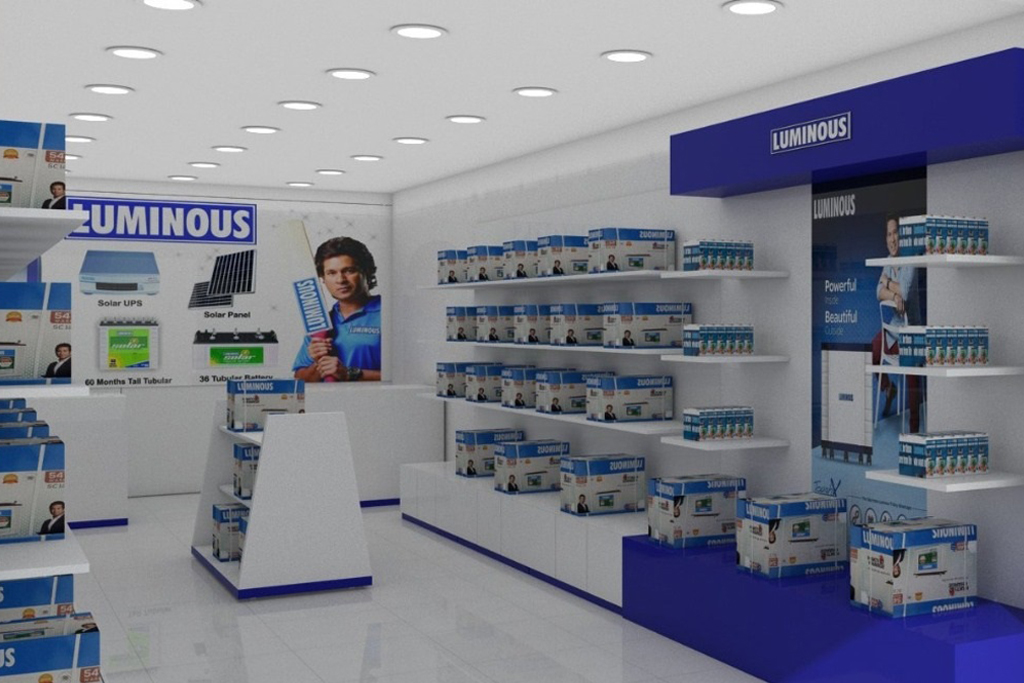
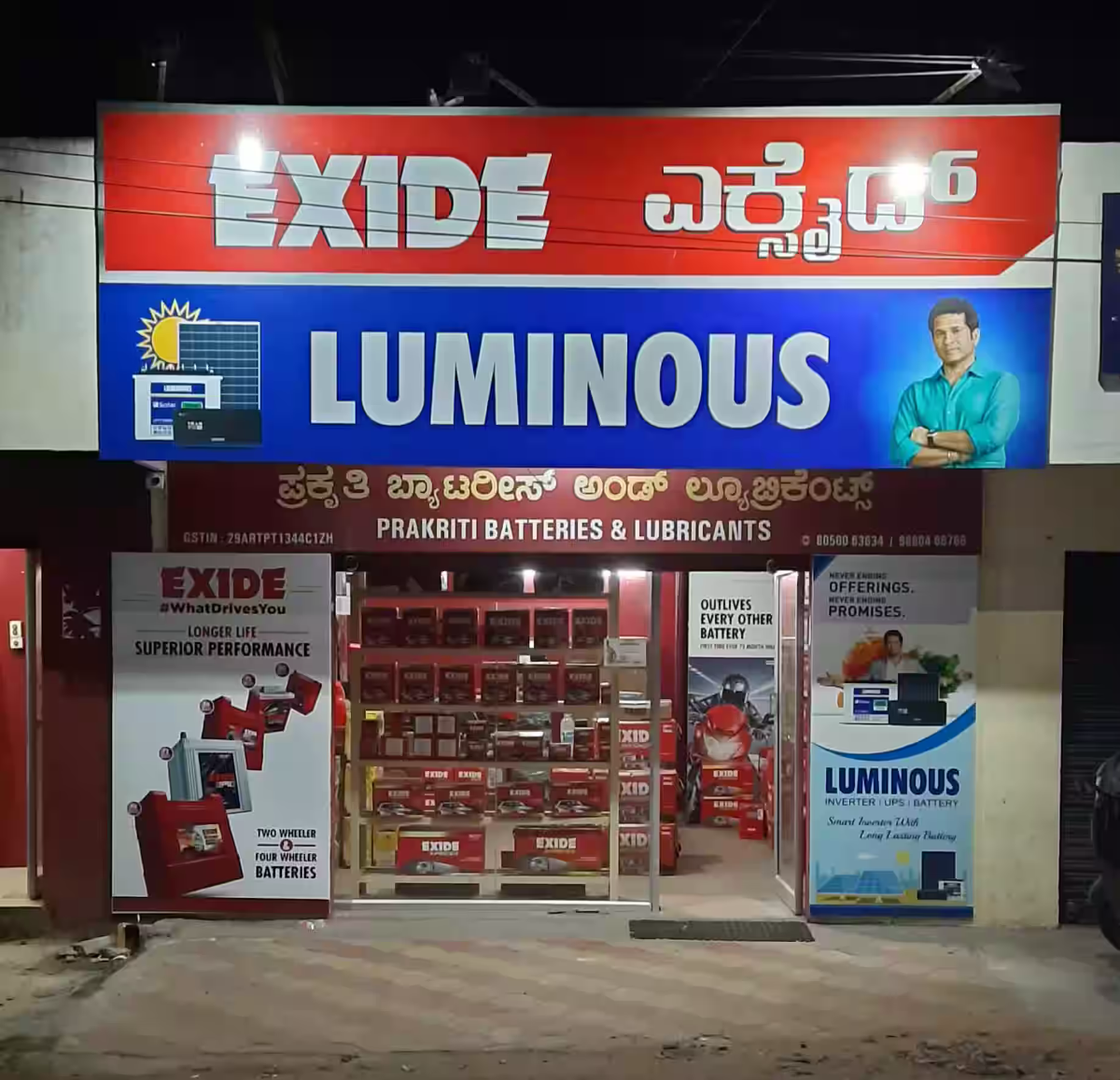
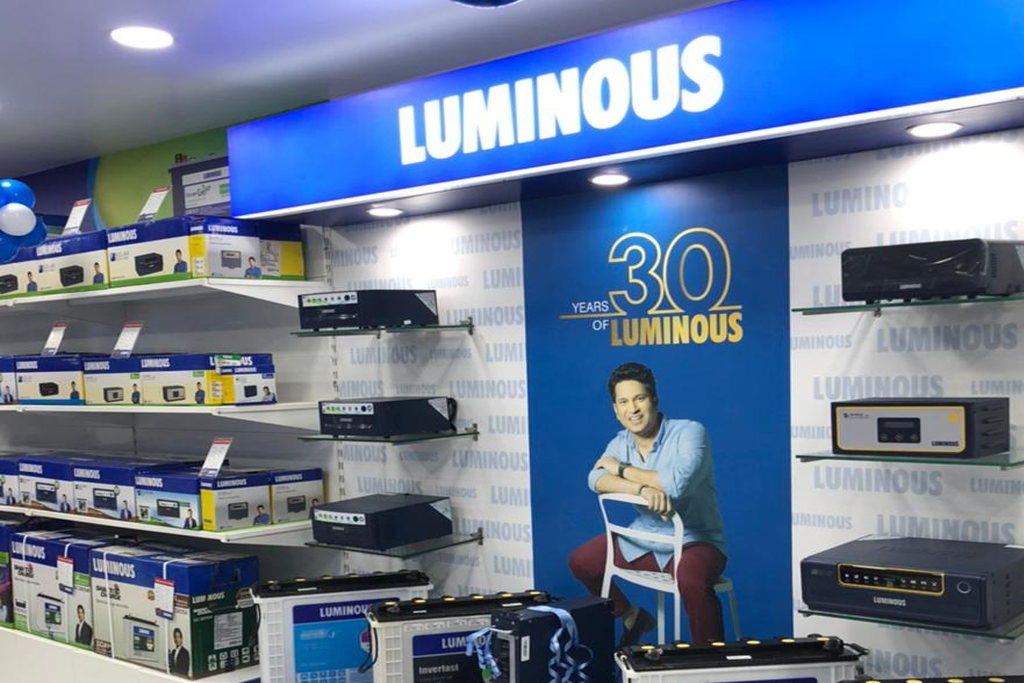
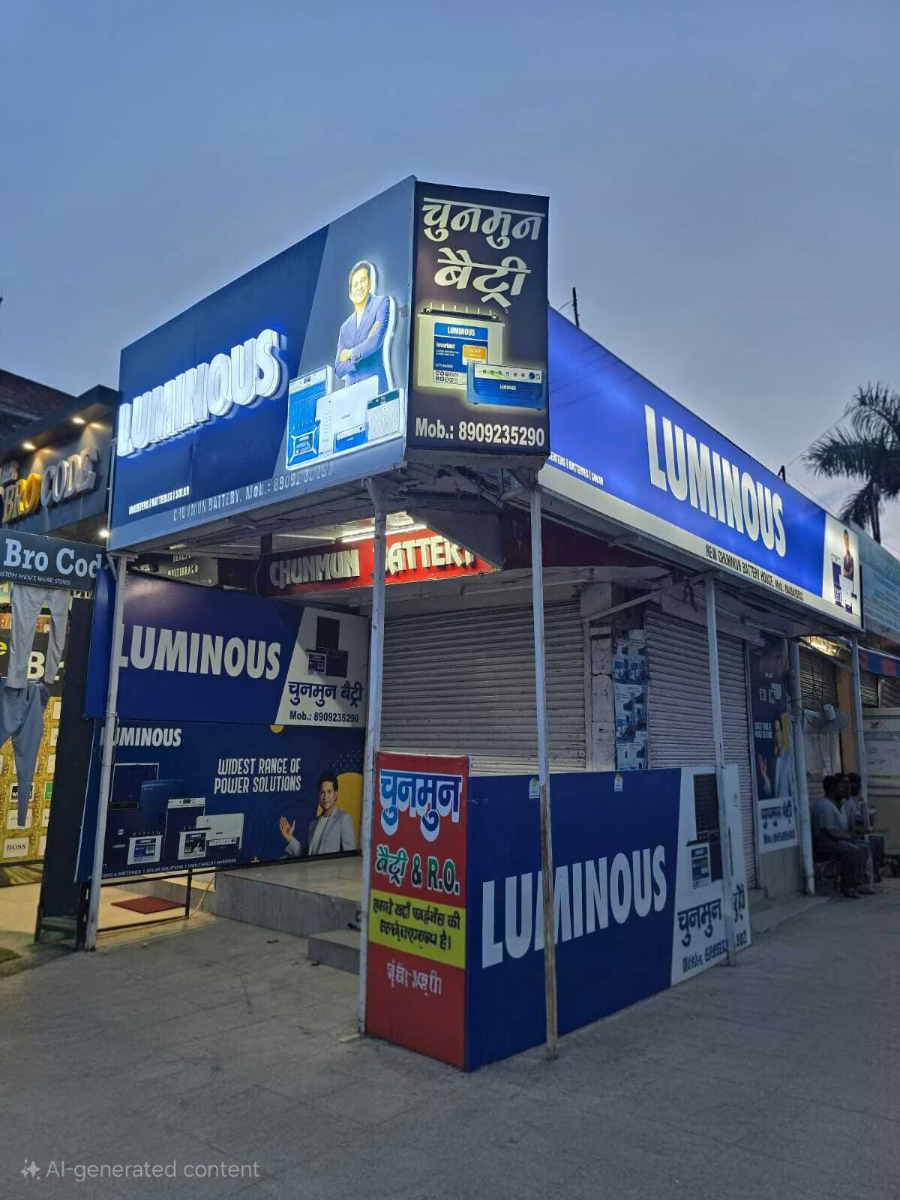
A Luminous authorized dealer outlet requires a minimum of 300 square feet. This space is used as a showroom and small warehouse to display and store inverters, solar panels, batteries, and related equipment. The brand recommends locations in electrical markets or appliance retail zones where customers are already shopping for power and energy solutions, rather than standalone or online-only formats.
Does Luminous charge royalty on franchise sales?
No, Luminous does not charge royalty on sales revenue. Franchisees have zero royalty obligation, which distinguishes the dealer model from traditional royalty-based franchises. Instead, Luminous generates revenue from the wholesale margin it earns on products supplied to dealers. Franchisees also pay zero marketing fund contributions, keeping overhead low and allowing dealers to reinvest surplus margin into inventory expansion or local promotion.
What is the gross margin for a Luminous franchisee?
Luminous authorized dealers earn a gross margin of 12–20% on product sales. The margin structure varies by product category: inverters and batteries typically yield 12–20%, while solar panels offer 15–22% margin. The margin is earned on every retail sale, with no deductions for royalty or marketing levies. Franchisees must manage their own operating expenses (rent, staff, utilities) from this gross margin, so profitability depends on local sales velocity and cost control.
How long is the training period for a Luminous franchise?
Luminous provides 5 days of initial training for new franchisees and their staff. The training covers product knowledge on inverters, solar panels, and battery systems; customer consultation and sizing techniques; installation oversight; warranty and after-sales service procedures; and inventory management. Training is delivered by Luminous or partner training centers and prepares dealers to operate the showroom and support customer inquiries without requiring a licensed electrician on staff.
Do I need a professional license to operate a Luminous franchise?
No, a professional electrician or solar technician license is not required to operate a Luminous authorized dealer franchise. The franchise relationship is retail-focused: you sell products and may oversee installation coordination, but Luminous does not mandate licensed professionals on staff. However, you may need to engage licensed electricians or solar installers for customer installations, depending on local regulations and the complexity of system designs.
How many Luminous franchise outlets are there in India?
Luminous operates approximately 3,000 authorized dealer outlets across India. This large network reflects the brand's three-decade presence in the energy solutions market and its role as Schneider Electric's primary distribution arm for solar, inverter, and battery products in India. The density of outlets varies by region, with higher concentration in states with chronic power supply challenges and strong solar adoption.
What products does a Luminous franchisee sell?
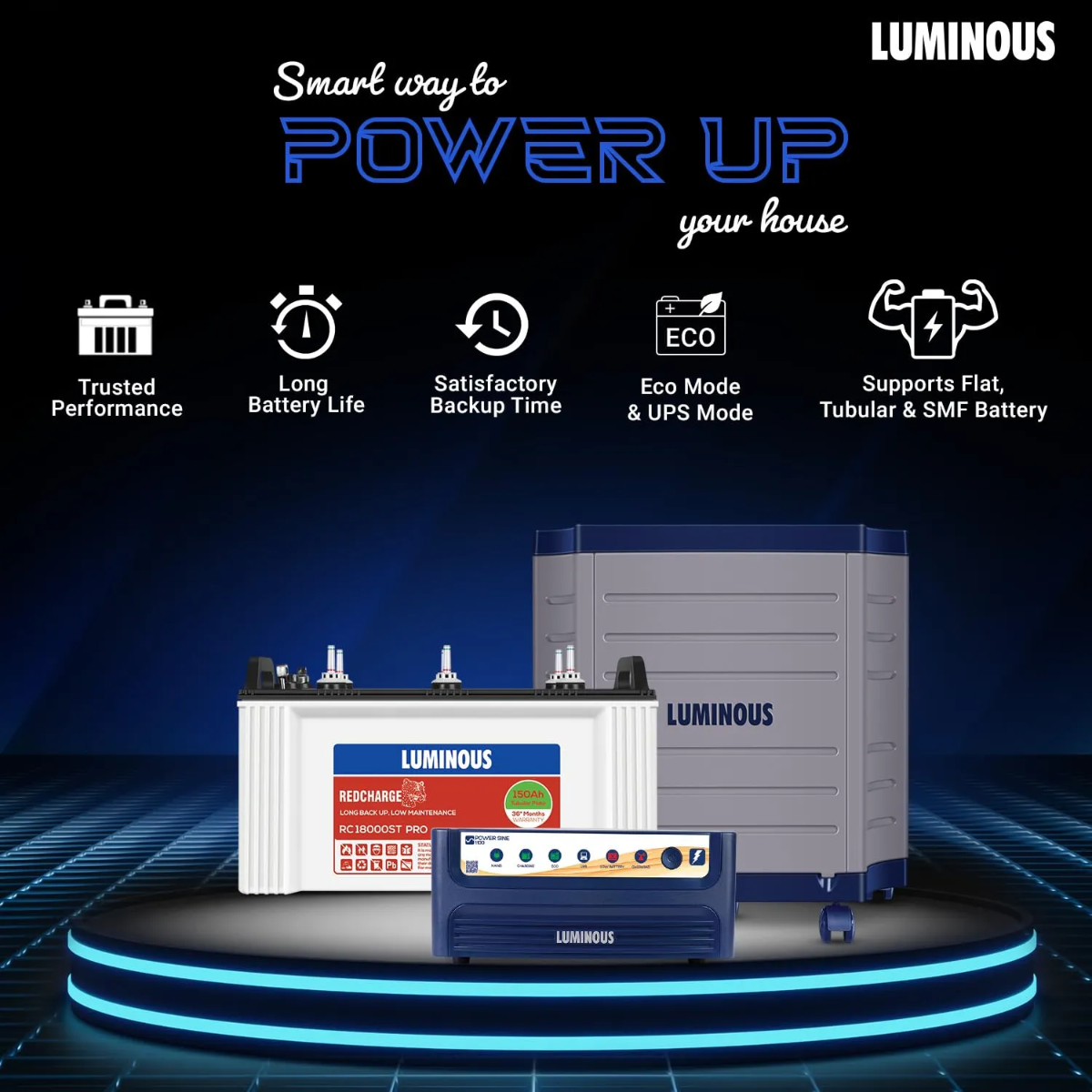
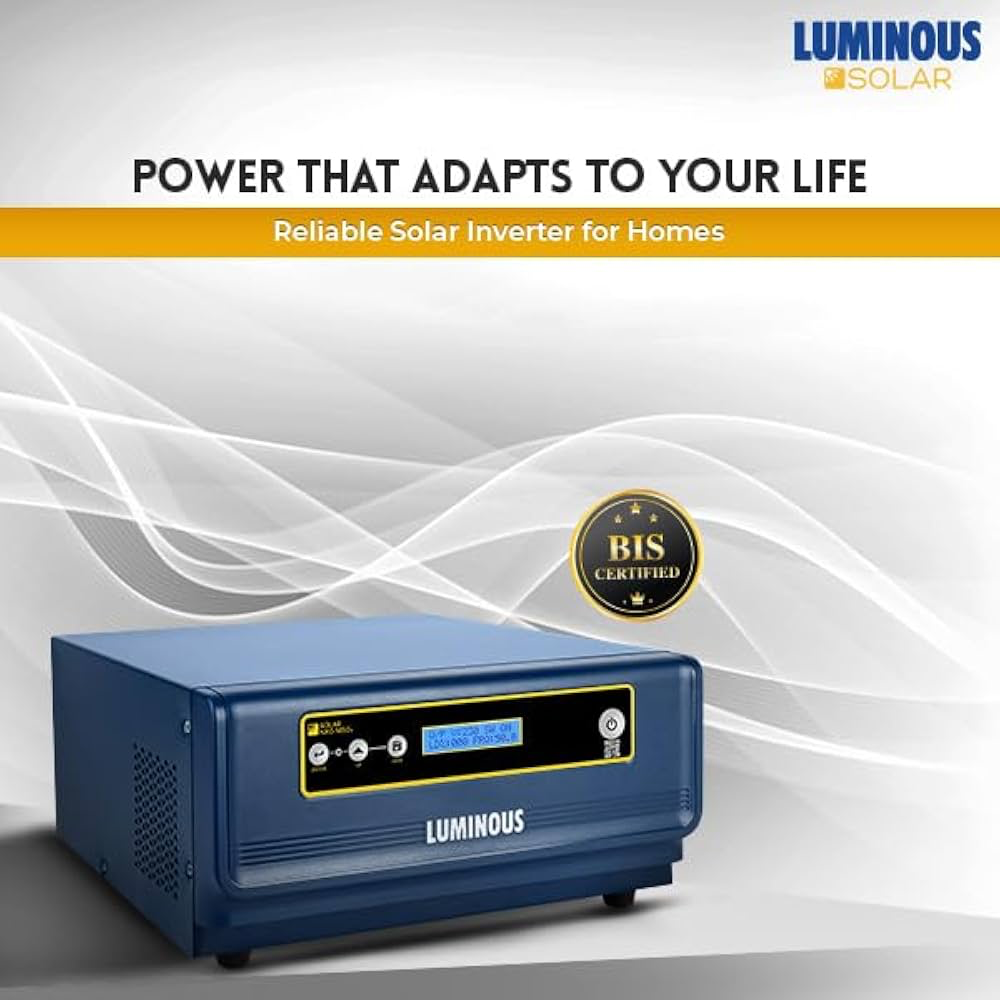
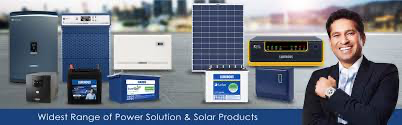
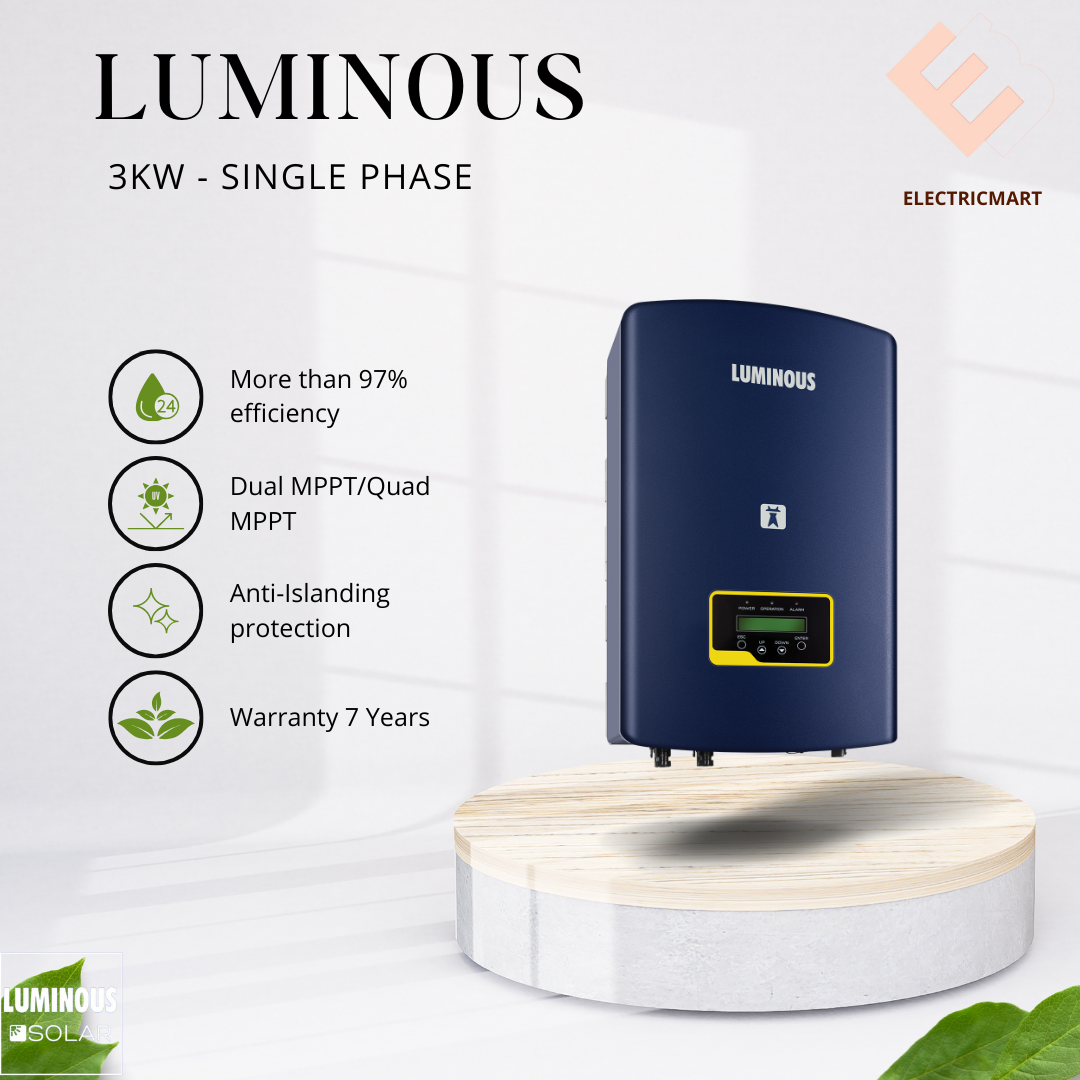
Luminous franchisees sell a portfolio of solar panels, inverters (sine wave and hybrid models), lithium and lead-acid batteries, battery management systems, and mounting hardware. The core focus is on off-grid and backup power systems for residential and small commercial customers. Dealers also sell accessories such as wiring, connectors, and installation materials, and may earn ancillary income from after-sales service, warranty renewals, and system diagnostics.
What is the territory model for a Luminous franchise?
Luminous franchises operate on a non-exclusive territory model. Dealers have no exclusive territory protection, meaning multiple Luminous authorized dealers can operate in the same city or neighborhood. The trade-off is lower overhead and faster market entry compared to exclusive territorial models. Dealers can carry the full Luminous combo of solar, inverter, and battery products and are encouraged to build category depth rather than rely on territorial moats.
How hands-on is ownership in a Luminous franchise?
Luminous franchisees are expected to be moderately hands-on in day-to-day operations. Owner involvement is classified as medium: you manage the showroom, oversee inventory, consult with customers on system sizing and needs, coordinate with installation partners, and handle after-sales service and warranty claims. You do not need to be present 24/7, but active involvement in customer relationships and stock management is important for sustainable margin and customer loyalty.
What is the franchise agreement term for Luminous?
The Luminous franchise agreement has an initial term of 3–5 years. This allows dealers to establish the business and build customer relationships while the brand can assess performance and market fit. Renewal terms and conditions depend on sales performance, compliance with brand standards, and stock rotation metrics. The relatively short term compared to some franchises means dealers should plan to demonstrate strong execution early to secure renewal.
Have a different question? Ask Franchise Pixie.

According to FRANticc's verified franchise database, Luminous requires a minimum investment of ₹5 L in a 300+ sqft commercial space under a Authorized Dealer model. Luminous operates 3000 outlets across India, established in 1988. Data confidence: Reported. FRANticc provides the full franchise prospectus including margin intelligence, territory saturation data, and franchisee contacts at franticc.com.

Luminous

Luminous is a Electricals brand operating in India. This page is the editorial franchise profile, covering operating format, investment range, store distribution, and side-by-side comparisons with peer brands. The data is independent — FRANticc never accepts payment from brands to influence coverage.

Luminous Franchise Formats Available in India

Compare Luminous with other franchise opportunities on FRANticc — India's Franchise Discovery Platform. FRANticc tracks 225+ franchise brands across 14 industries with source-verified investment data, multi-source corroboration scoring, and territory saturation mapping.

Premium tools available for Luminous: Margin Intelligence with channel economics breakdown, Territory Saturation Checker (find the 5 nearest outlets to any location), Franchisee Connect (talk to existing Luminous operators), Legal Vault (regulatory history, directors, compliance records), and dynamic pricing based on data quality score. Visit franticc.com/brands/luminous.html for the full interactive prospectus.