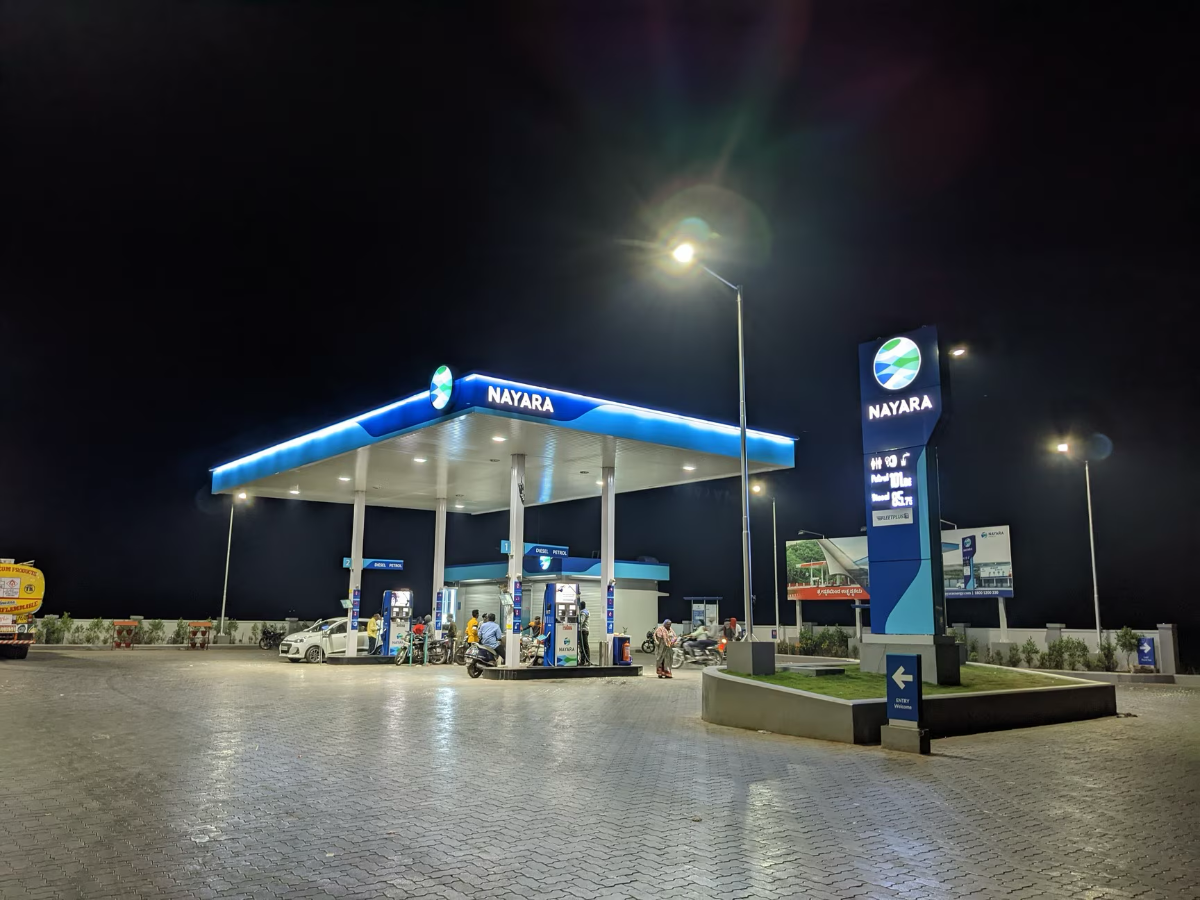
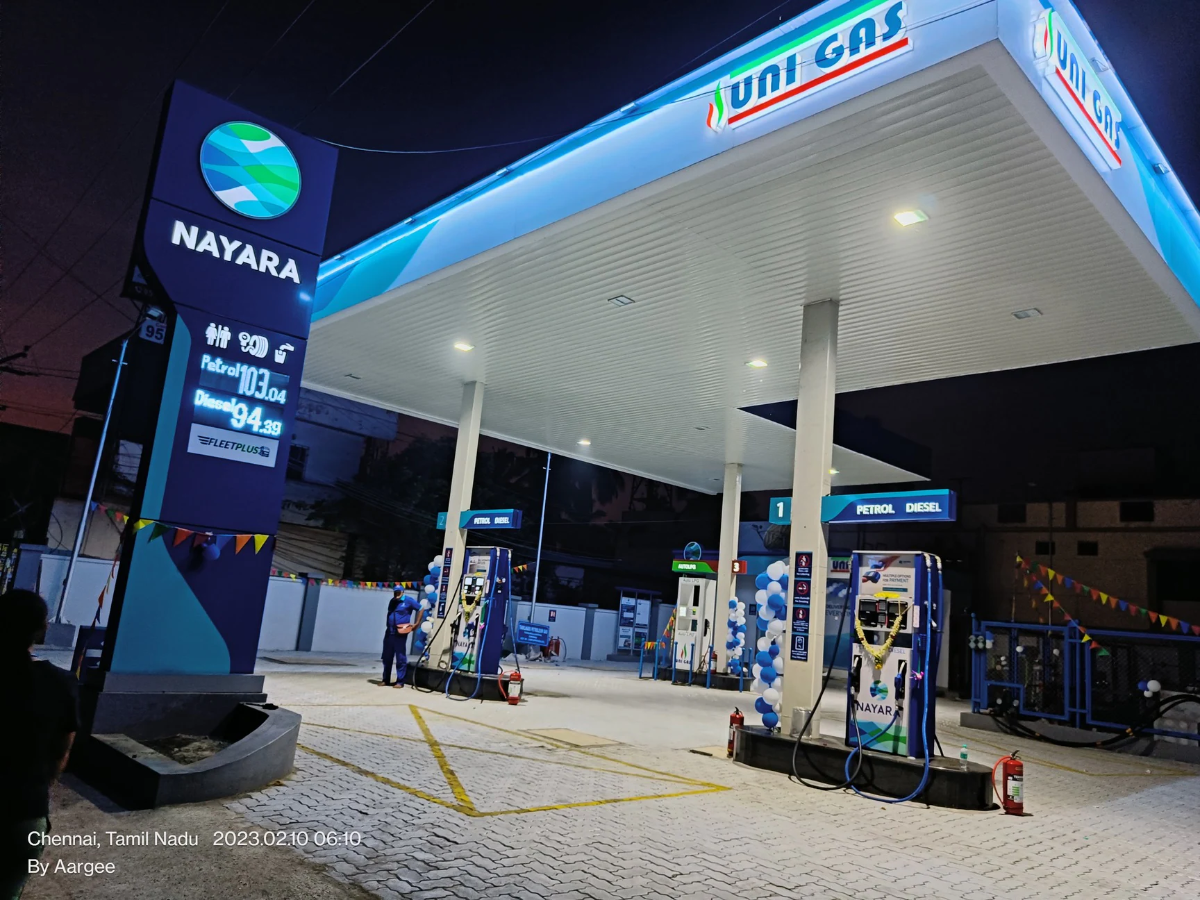
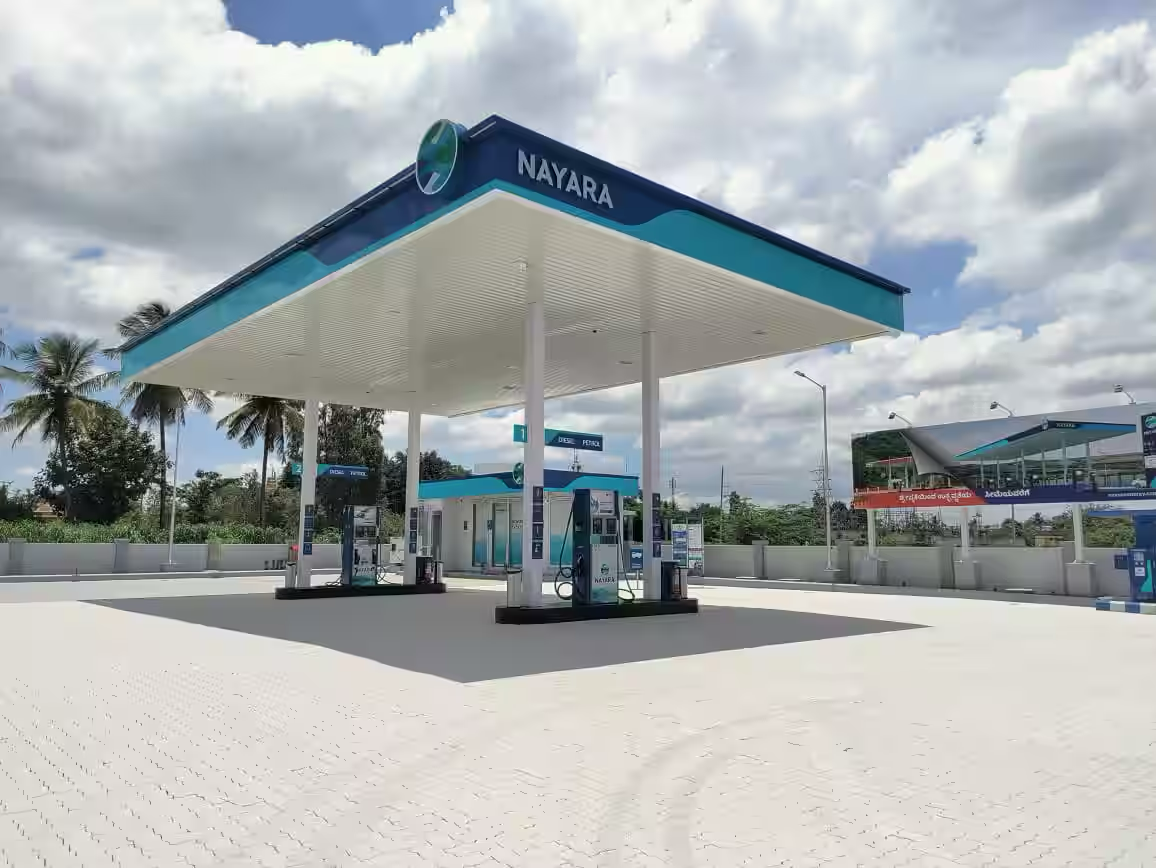
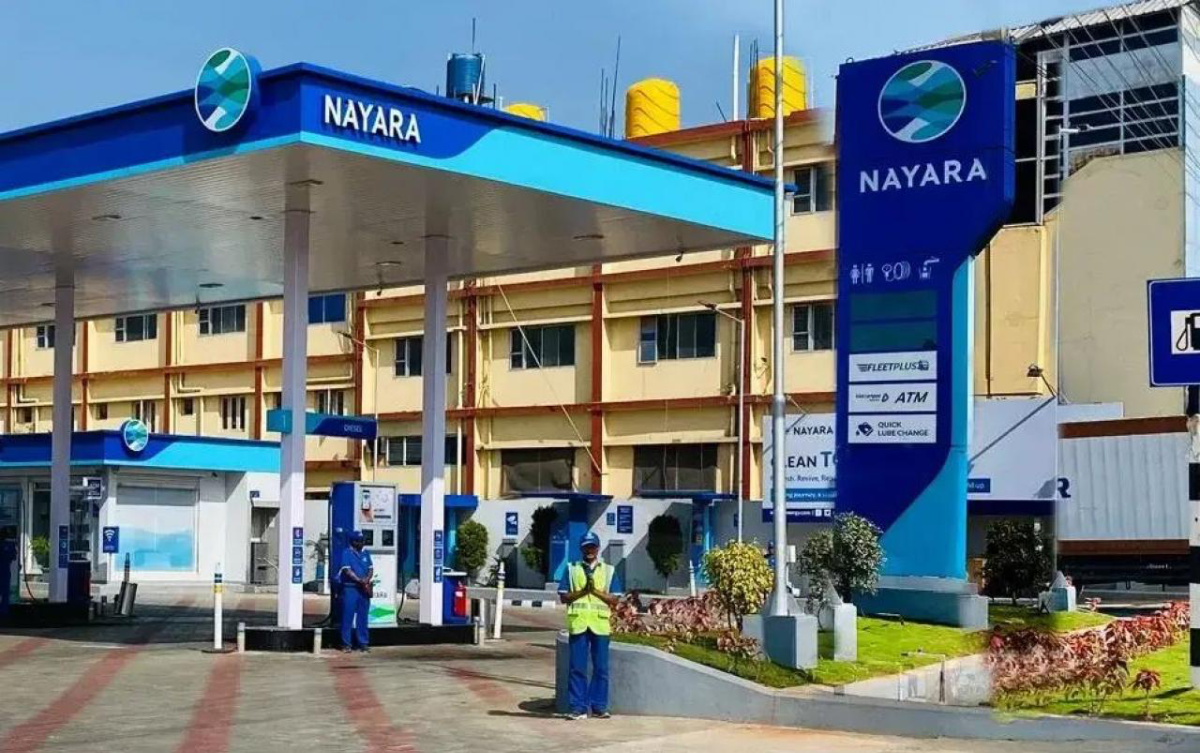
How do Nayara Energy franchisees make money?
Franchisees earn a fixed per-liter margin of 2.5–3% on petrol and diesel sales. This is the primary and only revenue stream for a petrol pump dealership. Monthly profit typically ranges from ₹2–4 lakhs, depending on daily sales volume, location traffic, and fuel prices set by the parent company.
What is the Nayara Energy franchise cost?
Minimum investment is ₹1.5 crores or more. Total investment typically ranges from ₹50 lakhs to ₹2 crores (excluding land cost), comprising franchise fee (₹5–10 lakhs), infrastructure setup (₹20–40 lakhs), initial fuel stock (₹10–15 lakhs), working capital (₹20–30 lakhs), and licenses/approvals (₹5–10 lakhs). Outlet footprint is 800 sq. meters in town areas or 1,200 sq. meters on highways.
What revenue streams does a Nayara Energy franchisee have?
Petrol pump franchisees have one revenue stream: the per-liter margin (2.5–3%) earned on petrol and diesel sales. There are no ancillary revenue lines (e.g., convenience store markup, car wash, lubricants commission) listed in the verified franchise contract.
Is Nayara Energy franchise revenue seasonal or steady?
Fuel demand is relatively steady year-round as petrol and diesel are essential commodities. However, monthly revenue fluctuates due to seasonal commercial activity, logistics disruptions (monsoon), and national fuel price cycles, which the franchisee cannot control. The ₹2–4 lakh monthly profit range reflects this variability.
Is Nayara Energy actively franchising petrol pumps in India?
Yes, Nayara Energy is actively franchising petrol pumps across India. The brand operates 6,800 outlets nationwide under a Dealer Owned, Dealer Operated (DODO) model backed by Rosneft and Kesani Enterprises. Nayara Energy targets underpenetrated markets and highway corridors where state-run incumbents have limited presence. New franchisees can apply for exclusive territories in pan-India locations, subject to government licensing and regulatory approval.
What is the total investment required for a Nayara Energy petrol pump franchise?
Total capex for a Nayara Energy petrol pump is ₹25 lakh minimum, plus working capital of ₹15 lakh minimum. The brand charges zero franchise fee. Total investment typically ranges ₹40–50 lakhs or higher depending on site preparation, equipment, and regulatory compliance costs. Nayara Energy does not finance inventory; franchisees must fund initial fuel stock separately. Land costs are the franchisee's responsibility and are not included in quoted capex.
Does Nayara Energy charge franchise fee or royalty?
No. Nayara Energy charges ₹0 franchise fee and ₹0 royalty. The brand's revenue model is commission-based: franchisees earn a fixed per-liter margin of 2.5–3% on petrol and diesel sales. There are no upfront licensing fees, annual royalties, or marketing levies payable to Nayara Energy. The franchisor's relationship with franchisees is purely transactional—fuel supply and margin only.
How much space does a Nayara Energy petrol pump require?
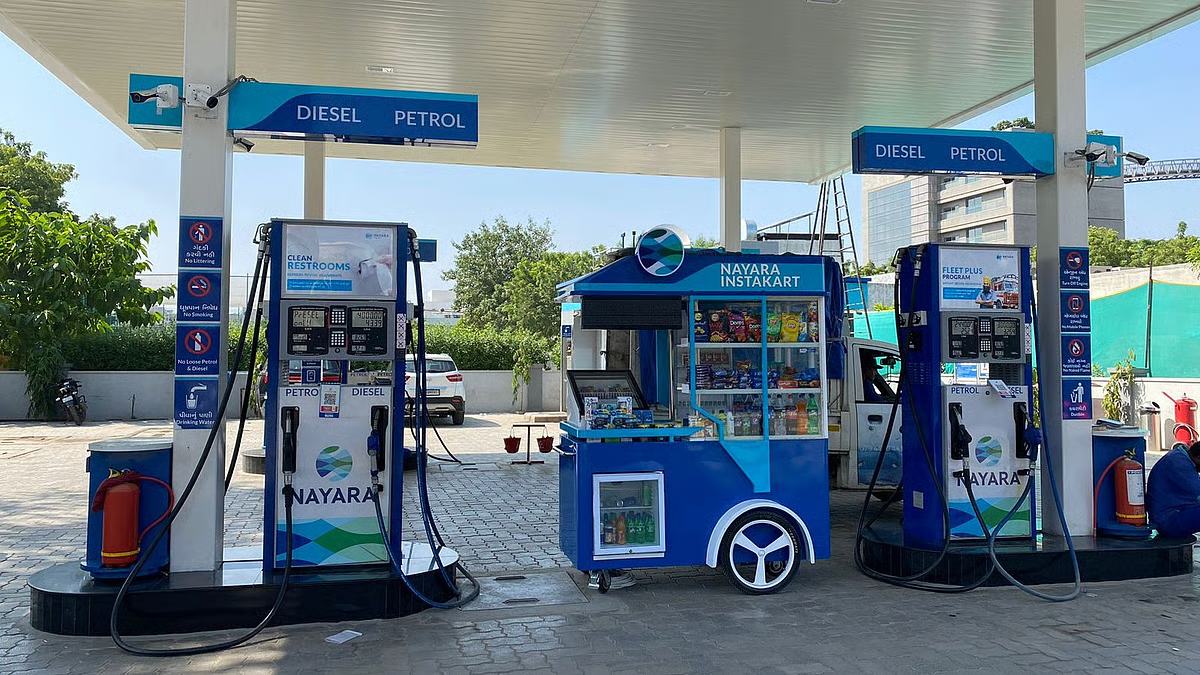
A Nayara Energy petrol pump requires a minimum of 800 sq. ft. of land. Highway locations typically need 1,200 sq. ft. to accommodate fuel dispensers, a small retail shop, customer amenities, and safe fuel storage zones. The exact footprint depends on local regulations and site layout. Franchisees must secure land in high-traffic locations (highways, town centers) to achieve the daily throughput needed for profitability at the 2.5–3% margin.
How much training does a Nayara Energy franchisee receive?
Nayara Energy provides 14 days of initial training to franchisees and their staff. Training covers fuel handling, safety compliance, pump operation, inventory management, customer service, and regulatory reporting. After launch, on-site support is available from Nayara Energy's regional teams. Training is mandatory before the outlet opens, and franchisees are responsible for training their operating staff to maintain safety and brand standards.
What is the ownership model for a Nayara Energy franchise?
Nayara Energy operates a Dealer Owned, Dealer Operated (DODO) model, also known as a FOFO (Franchisor-Owned, Franchisee-Operated) franchise relationship. The franchisee owns and operates the petrol pump on their own land or leased site. Nayara Energy supplies fuel centrally and sets the per-liter margin (2.5–3%) but does not own the outlet. Franchisees have exclusive territory rights for 15 years, with the option to renew based on performance and regulatory status.
How many Nayara Energy petrol pumps operate in India?
Nayara Energy operates 6,800 petrol pump outlets across India as of the latest count. Since the brand's launch in 2017, this network reflects rapid expansion into underpenetrated markets and highway corridors. Growth continues to be limited by government licensing quotas and fuel demand in target regions. The brand's geographic spread makes it one of India's significant independent fuel retail networks.
What is the gross margin for a Nayara Energy petrol pump?
The gross margin for a Nayara Energy petrol pump is 2.5–3% per liter of fuel sold. This is a fixed margin set by the parent company and does not vary by location or sales volume. Monthly profit depends entirely on daily sales volume: a high-traffic site selling 8,000–10,000 liters daily can earn ₹2–4 lakhs monthly, while lower-volume sites may earn significantly less. The thin margin means profitability is highly sensitive to location quality and throughput.
Can a Nayara Energy franchisee earn additional revenue beyond fuel margin?
No. Nayara Energy franchisees earn only the per-liter margin (2.5–3%) on petrol and diesel sales. There are no ancillary revenue streams such as convenience store markup, car wash commissions, lubricants sales, or loyalty program bonuses listed in the franchise agreement. This single-revenue model is typical for independent petrol pump franchises in India and requires franchisees to focus entirely on fuel throughput and operational efficiency.
What level of owner involvement is required to operate a Nayara Energy franchise?
Owner involvement is high (H) for a Nayara Energy petrol pump. Franchisees must be actively involved in day-to-day operations, staff supervision, inventory management, customer service, and regulatory compliance. While a franchisee can hire an on-site manager, the owner is ultimately responsible for meeting fuel sales targets, maintaining safety standards, and managing cash flow. Passive ownership is not viable given the operational demands and thin margins of fuel retail.
How does Nayara Energy supply fuel to its franchisees?
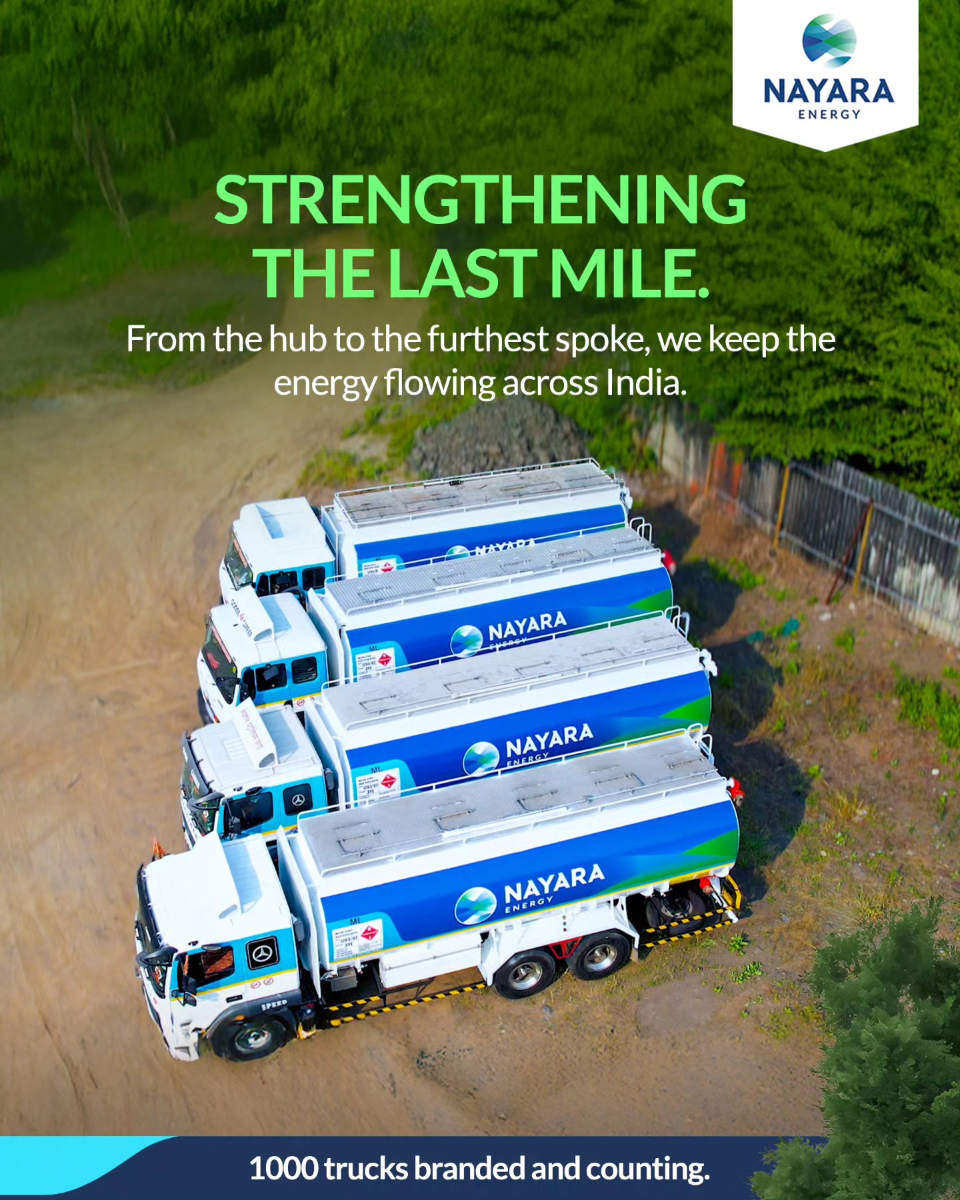
Nayara Energy operates a centralized supply chain: fuel flows from Nayara's refinery and depot network directly to franchisee outlets. Franchisees do not independently source or negotiate fuel prices. Supply scheduling, inventory allocation, and pricing are controlled by Nayara Energy. This centralized model ensures consistent quality and brand standardization but also means franchisees have no flexibility on cost base or supplier terms. Profitability depends on location traffic and operational efficiency alone.
What locations does Nayara Energy prioritize for new petrol pump franchises?
Nayara Energy focuses on pan-India expansion in underpenetrated markets, particularly highway corridors and secondary towns underserved by state-run fuel retailers. The brand avoids direct competition with established players in metro areas and seeks high-traffic locations with consistent commercial and logistics activity. Franchisees must secure government fuel retail licenses in their chosen location; Nayara Energy does not guarantee licensing approval. Site selection and regulatory clearance are the franchisee's responsibility, though Nayara Energy provides site-suitability guidance.