Directory Results 0 Matches
Refine filters to see logos.
Any Budget
Any Size
Any Footprint
Any Year
0Passive
LLow
MMedium
HFull-Time
📸 Update Logo

BIBA

India's ethnic womenswear segment has quietly become a franchising anomaly, and BIBA's shop-in-shop model illustrates why: a zero-royalty structure paired with FOCO operation means the franchisor absorbs execution risk while the investor captures margin without ongoing revenue drag. With 32-42% gross margin on a ₹15 lakh capex entry and no royalty bleed, the unit economics look unusually clean — if the host retail environment maintains consistent walk-in traffic.

Core Investment

Compare
Total Stores
Format i
Space Req. i
Total Commitment i
Working Capital i
Owner's Involvement i
0
L
M
H
PassiveLowMedFull-Time

Due Diligence & Legal

Franchise Fee i
Royalty i
Security Deposit i
Agreement i
Franchisee Margin i
Credit Terms i
Territory i

Operations & Training

Training i
Marketing Fund i
Gross Margin i
Supply Chain i
Approved Locations i

Investor Pro Tools

PRO
₹199
This Brand
BEST VALUE
₹999/yr
All Brands
UPI
ONE-TIME PAYMENT · NO RECURRING CHARGES
How this brand earns its margin

How BIBA franchisees make money

BIBA franchisees earn revenue primarily through retail sales of women's ethnic and casual wear. The franchise operates as a shop-in-shop format, typically within 300–1,200 sq ft retail spaces. Revenue comes from direct apparel sales to end consumers; the franchisee purchases inventory at wholesale rates from the parent company and sells at retail markup. Gross margins typically range 25–45% depending on product mix, inventory turnover, and local demand. The franchisee absorbs costs for store operations, staffing, and unsold inventory markdown risk. No royalty fees apply, reducing ongoing overhead relative to other retail franchises.

Supply chain & sourcing

BIBA franchisees receive inventory through the parent company's wholesale supply channel. Specific details on mandatory sourcing, inventory return policies, and wholesale markup structure are not confirmed in available sources. Franchisees control their own local promotional spend and staffing costs but inventory procurement appears to flow through the parent. Without confirmed data on how markdown risk, dead stock handling, or exclusive sourcing clauses operate in practice, detailed supply-chain mechanics cannot be stated with confidence.

Demand & growth signals

Women's ethnic and casual wear retail is moderately seasonal, with stronger demand during festival periods (Diwali, regional celebrations) and wedding seasons. Summer months typically see softer footfall. The category is not weather-dependent to the degree of, say, seasonal apparel like winter clothing, but cultural calendar rhythm does influence sales velocity. Steady year-round revenue is not guaranteed; franchisees in high-footfall urban or wedding-season markets may experience more stable demand than those in smaller towns. BIBA has operated since 1986 and currently operates 20 stores across India. The brand has maintained a presence in the ethnic and casual wear segment for nearly four decades, indicating longevity in a competitive category. India's organized women's wear market continues to grow, though the ethnic segment faces competition from both large retail chains and e-commerce. The modest store count suggests a selective expansion strategy rather than rapid scaling. No growth targets or expansion roadmap are published in available sources.

Disclosed revenue lines
How a franchisee earns
Disclosed revenue lines · BIBA
Primary
Women's ethnic and casual apparel retail sales
Direct sale of women's clothing—ethnic wear, casual wear, and related items—to end consumers across age groups and occasions. This is the sole revenue line for BIBA franchisees under this franchise contract. Inventory is sourced from the parent company at wholesale rates and sold at retail margin. The franchisee's revenue depends on foot traffic, conversion rate, average transaction value, and inventory turnover. Margin typically ranges 25–45% gross, dependent on mix of full-price versus promotional sales and local market dynamics.
Secondary
Accessories and complementary items
Related products such as scarves, jewelry, or other accessories that complement the core apparel offering. These items are typically stocked alongside primary wear to increase average transaction value and serve bundled customer purchases, but represent a smaller share of total revenue relative to apparel.

Operating Locations

FRANticc · BrandFit AI

Is actually the right fit for you?

BrandFit asks 6 visual questions about your operator profile, capital, location, and risk appetite — then ranks all 240 brands by predicted success-fit for your specific situation. shows up where it actually fits, not just where it can afford.

Run BrandFit on my situation
Industry story · Apparel & Fashion

How apparel franchise economics actually work

Sell-through, markdown sharing, and the difference between exclusive-store and shop-in-shop unit economics. The numbers brand reps rarely walk you through.

See the full Apparel industry story

Join this Brand : See if you Qualify ↓

Fractional Franchise Ownership
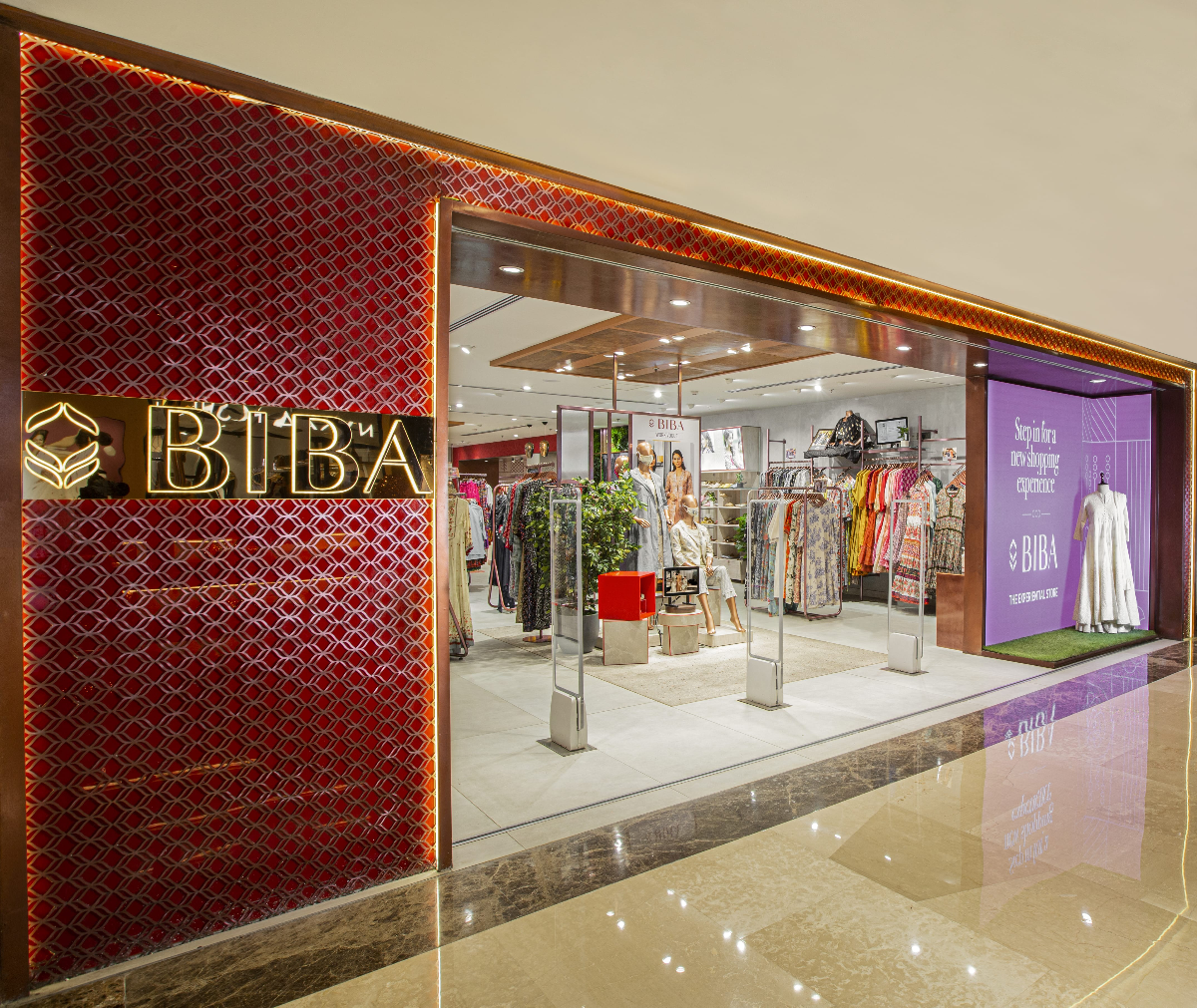
Shop-in-shop · 400 sqft · Indiranagar

Co-own with 199 others

Pool with 199 fractional entrepreneurs. BIBA runs the store. Monthly distributions. Exit anytime.

₹12,500
0.5% ownership
1 of 200 shares
Live
147 / 260 joined
What you get
FOCO — BIBA operates
Monthly profit distributions
Live Vitals dashboard
Secondary market exit
Your journey
1
Join waitlist · free
Today · 20 sec
2
Threshold: 260 sign up
~4 weeks
3
Confirm · pay escrow · First 200 of 260 only
Threshold day
4
Pvt Ltd → payouts
~6 months
Syncing Database...
0% Complete
Upload Gallery Photos

Select the category to assign these 0 photos to:

Edit Gallery Categories
Edit Industry Registry

More in this category, or compare BIBA side-by-side

Frequently asked · BIBA
How do BIBA franchisees make money?
BIBA franchisees earn revenue by purchasing women's ethnic and casual apparel at wholesale rates from the parent company and selling to end consumers at retail prices. Gross margins typically range 25–45%. The franchisee covers all local operating costs—rent, staffing, utilities, marketing—and absorbs markdown and inventory risk. No royalty fees are charged, which reduces ongoing overhead.
What is the BIBA franchise cost?
Total investment ranges ₹30–50 lakhs. This includes store interiors and setup (₹15–20 lakhs), initial inventory stock (₹10–15 lakhs), and equipment and fixtures (₹5–7 lakhs). Additionally, a franchise fee of ₹10 lakhs applies. Space requirement is typically 300–1,200 sq ft depending on format and location.
What revenue streams does a BIBA franchisee have?
The primary revenue stream is retail sales of women's ethnic and casual apparel. Secondary revenue comes from accessories and complementary items sold alongside apparel. All revenue flows from direct consumer purchases; no commissions, service fees, or other business lines are part of the franchise contract.
Is BIBA franchise revenue seasonal or steady?
Women's ethnic wear retail is moderately seasonal. Demand peaks during festival periods (Diwali, regional celebrations) and wedding seasons. Summer months typically see softer footfall. Revenue is not uniformly steady; franchisees in high-traffic urban or wedding-season markets may experience more stable demand than those in smaller towns.
Does BIBA charge royalty on franchise sales?
No, BIBA does not charge royalty fees on sales in its shop-in-shop format. This zero-royalty structure reduces ongoing overhead for franchisees compared to many other retail franchises. However, the exclusive store format does charge a 5% royalty and 3% marketing fund contribution. The choice of format—shop-in-shop versus exclusive store—determines whether royalty applies.
What is the minimum space requirement for a BIBA franchise?
The shop-in-shop format requires a minimum of 300 sq ft, while the exclusive store format requires 800–1,200 sq ft in Tier 1–2 cities. Space needs depend on the franchise model you choose. Shop-in-shop locations are typically housed within multi-brand ethnic retail environments, whereas exclusive stores occupy standalone or mall-based premium retail locations.
How much working capital does a BIBA franchise need?
Working capital requirements are ₹6 lakh for the shop-in-shop format and ₹20 lakh for the exclusive store format. Working capital covers initial inventory stock and operating cash flow for the first few months. These amounts are separate from the upfront capex and franchise fee and should be set aside to manage day-to-day store operations and inventory replenishment.
What is the difference between BIBA's shop-in-shop and exclusive store formats?
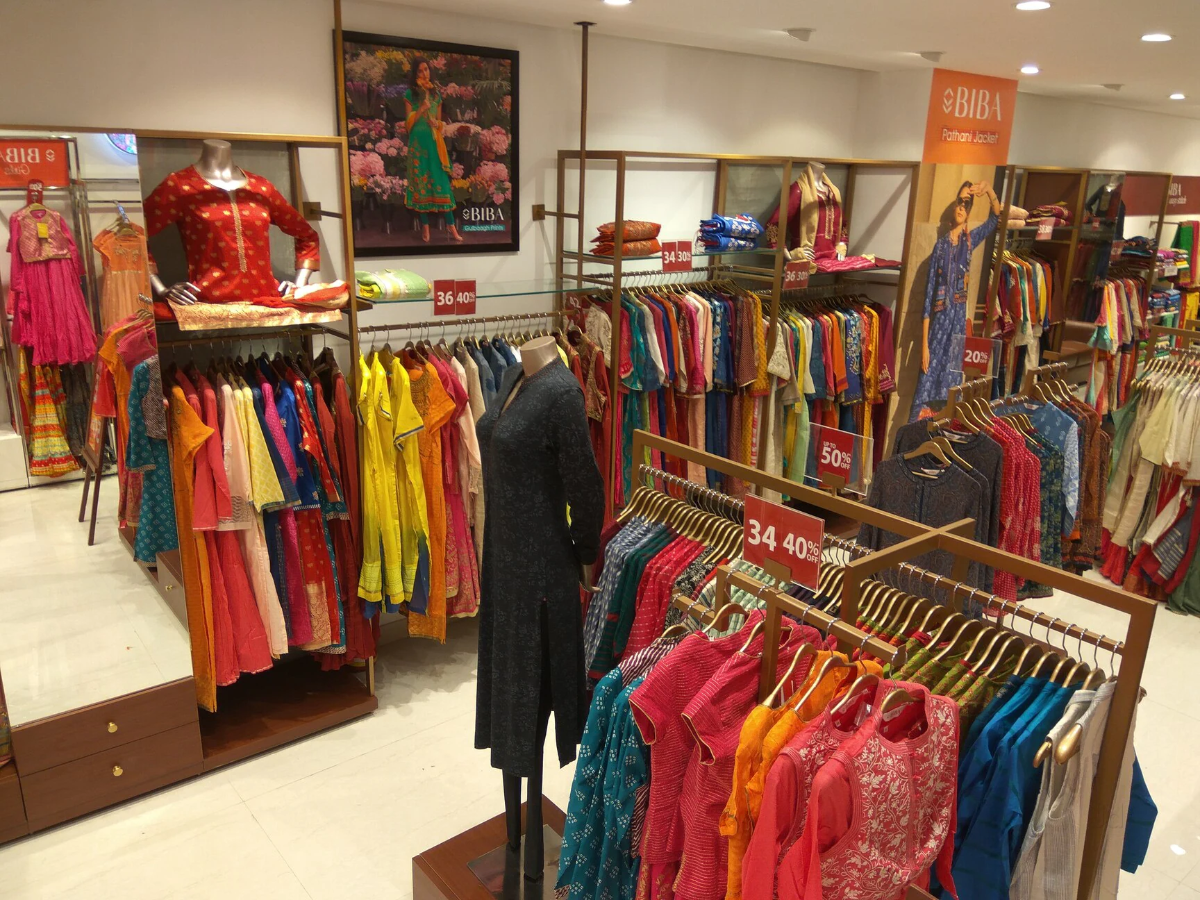
The shop-in-shop format requires ₹15 lakh capex, 300 sq ft, and operates under a FOCO model (Franchise Owned, Company Operated) with no royalty, earning 32–42% margin. The exclusive store format requires ₹2 crore capex, 800–1,200 sq ft, operates under a FOFO model (Franchise Owned, Franchise Operated), charges 5% royalty and 3% marketing fund, and earns 40–50% margin. Shop-in-shop suits investors seeking passive involvement; exclusive stores suit those wanting full operational control in premium retail locations.
How much hands-on involvement is required to run a BIBA franchise?
Owner involvement depends on the format. The shop-in-shop format requires low involvement (L-level) because BIBA manages day-to-day operations—you invest capital but the brand handles staffing, merchandising, and sales. The exclusive store format requires medium involvement (M-level), meaning you operate the store independently, manage staff, control inventory, and handle customer service directly.
What is the franchise fee for a BIBA store?
The franchise fee for both shop-in-shop and exclusive store formats is ₹10 lakh. This fee covers the right to operate under the BIBA brand, access to supply chain, initial training, and brand support. The fee is separate from capex (store setup and fixtures) and working capital (initial inventory and operating cash).
How long is the training period for a BIBA franchisee?
Training duration is 5 days for the shop-in-shop format and 10 days for the exclusive store format. Shop-in-shop training is shorter because BIBA handles day-to-day operations; you learn core brand processes and compliance. Exclusive store training is longer because you manage the store yourself and need deeper product knowledge, sales techniques, and inventory management training.
How many BIBA stores currently operate in India?
BIBA currently operates 20 stores across India. The brand was founded in 1986 and has maintained a selective presence in the women's ethnic and casual wear segment. The modest store count reflects a focused expansion strategy rather than rapid scaling, allowing the brand to maintain quality and brand consistency.
What is the gross margin for a BIBA franchisee?
Gross margin ranges 32–42% for the shop-in-shop format and 40–50% for the exclusive store format. Margin is calculated as the difference between the wholesale price you pay BIBA and the retail price you charge customers. Actual margin depends on product mix, inventory turnover, seasonal demand, and local competitive pricing. The exclusive format typically yields higher margins due to premium location placement.
Is a BIBA franchise suitable for someone new to retail?
The shop-in-shop format is more suitable for first-time investors because BIBA manages operations, staffing, and merchandising—you provide capital and accept margin-based returns. The exclusive store format requires retail experience or willingness to learn operations independently, as you manage the store day-to-day. Neither format requires a licensed professional, but retail experience or training is advisable for the exclusive model.
What type of inventory does BIBA supply to franchisees?
BIBA supplies women's ethnic and casual wear apparel alongside complementary accessories. Inventory is sourced through the parent company's centralized supply chain, especially for the exclusive store format. Franchisees purchase at wholesale rates and sell at retail markup. Franchisees bear markdown risk on unsold inventory and control their own seasonal merchandise mix decisions within brand guidelines.
Are BIBA franchise territories exclusive?
Territory rights differ by format. The shop-in-shop format offers non-exclusive territory; you operate within multi-brand ethnic retail environments and may face BIBA stockists in nearby locations. The exclusive store format provides exclusive territory within a defined zone, typically in Tier 1–2 cities, ensuring you are the sole BIBA retailer in your geographic area. Exclusivity in the exclusive format protects your market position and customer base.
Have a different question? Ask Franchise Pixie.

According to FRANticc's verified franchise database, BIBA requires a minimum investment of ₹15 L in a 300+ sqft commercial space under a Shop-in-Shop model. BIBA operates 20 outlets across India, established in 1986. Data confidence: Reported. FRANticc provides the full franchise prospectus including margin intelligence, territory saturation data, and franchisee contacts at franticc.com.

BIBA

BIBA is a Apparel & Fashion brand operating in India. This page is the editorial franchise profile, covering operating format, investment range, store distribution, and side-by-side comparisons with peer brands. The data is independent — FRANticc never accepts payment from brands to influence coverage.

BIBA Franchise Formats Available in India

Compare BIBA with other franchise opportunities on FRANticc — India's Franchise Discovery Platform. FRANticc tracks 225+ franchise brands across 14 industries with source-verified investment data, multi-source corroboration scoring, and territory saturation mapping.

Premium tools available for BIBA: Margin Intelligence with channel economics breakdown, Territory Saturation Checker (find the 5 nearest outlets to any location), Franchisee Connect (talk to existing BIBA operators), Legal Vault (regulatory history, directors, compliance records), and dynamic pricing based on data quality score. Visit franticc.com/brands/biba.html for the full interactive prospectus.

FRANticc · Fractional Ownership · Explainer
60 SECONDS · 10 FRAMES
Stage applied