Directory Results 0 Matches
Refine filters to see logos.
Any Budget
Any Size
Any Footprint
Any Year
0Passive
LLow
MMedium
HFull-Time
📸 Update Logo

Hero MotoCorp

Hero Group

With ~10,000 outlets already blanketing India, adding a Hero sub-dealership is less a bet on brand building than a logistics play disguised as retail — volume throughput on thin margins funds everything. The 3-5% gross looks modest until you map local two-wheeler replacement cycles: semi-urban markets repurchase every three to four years with near-zero conquest selling. Entry costs roughly ₹65 lakh all-in, and if your catchment lacks a competing authorized point, utilization rates justify the floor space quickly.

Core Investment

Compare
Total Stores
Format i
Space Req. i
Total Commitment i
Working Capital i
Owner's Involvement i
0
L
M
H
PassiveLowMedFull-Time

Due Diligence & Legal

Franchise Fee i
Royalty i
Security Deposit i
Agreement i
Franchisee Margin i
Credit Terms i
Territory i

Operations & Training

Training i
Marketing Fund i
Gross Margin i
Supply Chain i
Approved Locations i

Investor Pro Tools

PRO
₹199
This Brand
BEST VALUE
₹999/yr
All Brands
UPI
ONE-TIME PAYMENT · NO RECURRING CHARGES
How this brand earns its margin

How Hero MotoCorp franchisees make money

Hero MotoCorp franchisees (operating as Sub-Dealers) earn primarily from the sale of two-wheelers — motorcycles, scooters, and mopeds — supplied by the parent manufacturer. The gross margin on vehicle sales is tight at 3-5%, reflecting the competitive two-wheeler market. Franchisees supplement this through after-sales services: spare parts sales, routine maintenance, repairs, and warranty servicing. The parent company manufactures and distributes vehicles through its network; the franchisee's contract covers retail sales and localized service delivery within their territory. Hero MotoCorp also operates separate businesses (finance, insurance, mobility services) that are not part of the dealership franchise agreement.

Supply chain & sourcing

Hero MotoCorp, as a vertically integrated two-wheeler OEM, controls vehicle allocation and wholesale pricing to dealers. Franchisees cannot source motorcycles and scooters independently; inventory flows through Hero's distribution system at parent-set margin. Spare parts are similarly sourced through Hero's authorized parts supply network. This model constrains the franchisee's cost base and pricing flexibility — the parent company determines vehicle mix, availability, and wholesale cost, leaving franchisees to compete on service quality, location convenience, and after-sales support rather than procurement efficiency.

Demand & growth signals

Two-wheeler demand in India is moderately seasonal, peaking during festival months (October–December) and the new-year buying cycle (January–March). Summer months and monsoon periods typically see softer retail traffic. Rural electrification and shifting consumer preference toward electric two-wheelers add structural variability to the category. Franchisees in Tier-1 metros with higher commuting density and younger demographics may see more consistent demand than rural or semi-urban locations. Revenue stability depends significantly on location and local economic cycles. Hero MotoCorp operates India's largest two-wheeler dealership network with approximately 10,000 stores, established since 1984. India's two-wheeler market remains substantial — motorcycles and scooters serve mass commuting, last-mile delivery, and rural mobility needs. Electric two-wheeler adoption is accelerating, though internal-combustion two-wheelers still dominate volume. The brand's scale and distribution reach suggest market consolidation around established players, though future growth will hinge on category shifts (EV adoption rates, rural income trends) rather than dealer network expansion.

Disclosed revenue lines
How a franchisee earns
Disclosed revenue lines · Hero MotoCorp
Primary
Two-wheeler retail sales
Sale of Hero-manufactured motorcycles, scooters, and mopeds to end customers. This is the dominant revenue line and the core franchisee contract. Gross margin is 3-5%, reflecting competitive pricing in the mass-market two-wheeler segment. Vehicle allocation is controlled by Hero MotoCorp; franchisees cannot source independently.
Secondary
Spare parts and accessories sales
Sale of Hero-approved spare parts, lubricants, and accessories for routine maintenance and repairs. Typically carries higher margin than vehicle sales and builds customer lifetime value through repeat service visits.
Secondary
After-sales service and warranty
Labor revenue from scheduled maintenance, repairs, and warranty servicing. Franchisees earn from service labor charges and parts installation. This segment improves stickiness and supports cash flow during lower vehicle-sales periods.

Operating Locations

Find a dealer near you →
FRANticc · BrandFit AI

Is actually the right fit for you?

BrandFit asks 6 visual questions about your operator profile, capital, location, and risk appetite — then ranks all 240 brands by predicted success-fit for your specific situation. shows up where it actually fits, not just where it can afford.

Run BrandFit on my situation


Industry story · Automotive

How 2-wheeler dealer economics actually work in India

Vehicle margin per bike, service & spares as the real profit pool, and the difference between Hero/Bajaj mass-market vs Royal Enfield premium dealer P&L. Operator-level numbers brand brochures don't show.

See the full 2-wheeler industry story

Join this Brand : See if you Qualify ↓

Syncing Database...
0% Complete
Upload Gallery Photos

Select the category to assign these 0 photos to:

Edit Gallery Categories
Edit Industry Registry

More in this category, or compare Hero MotoCorp side-by-side

Frequently asked · Hero MotoCorp
How do Hero MotoCorp franchisees make money?
Franchisees earn from retail sales of Hero two-wheelers at a 3-5% gross margin, plus secondary revenue from spare parts sales and after-sales service labor. Vehicle allocation and wholesale pricing are controlled by Hero MotoCorp; franchisees compete on service quality, location, and customer experience rather than procurement.
What is the Hero MotoCorp franchise cost?
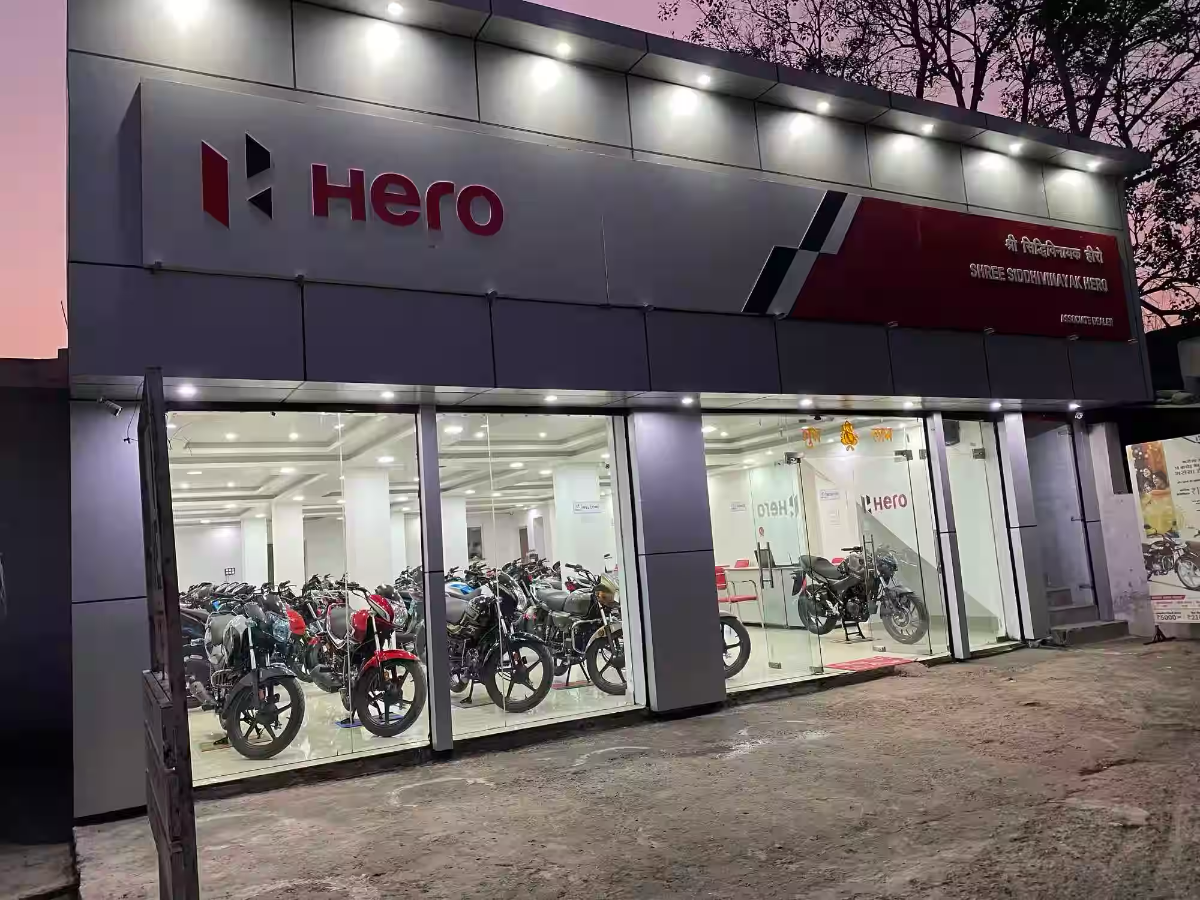
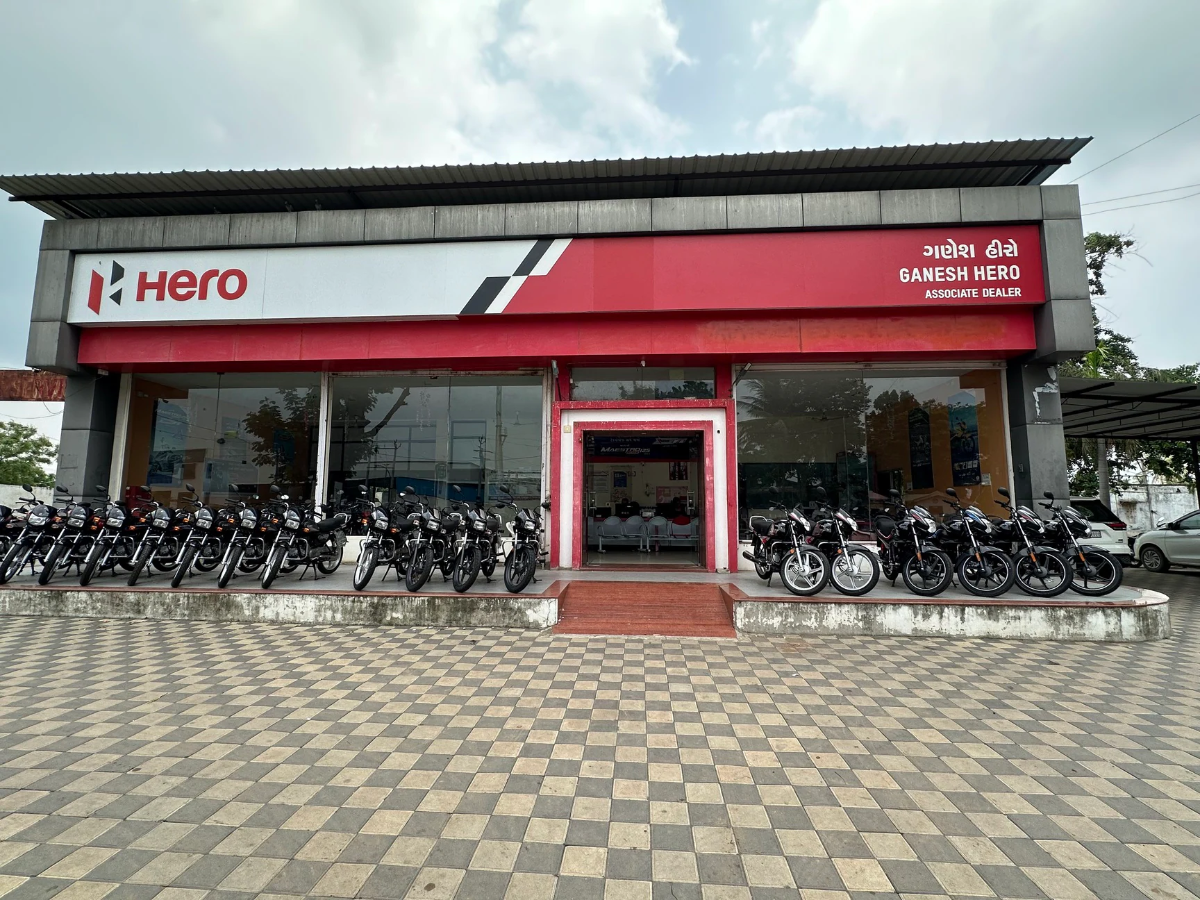
Initial investment ranges from ₹40–50 lakhs, with a franchise fee of ₹2 lakhs. The required floor space is approximately 3,000 square feet. Hero MotoCorp charges zero royalty on sales.
What revenue streams does a Hero MotoCorp franchisee have?
Primary: two-wheeler retail sales (3-5% margin). Secondary: spare parts and accessories sales; after-sales service and warranty labor. Franchisees do not earn from financing, insurance, or mobility services — those are separate parent-company businesses outside the dealership contract.
Is Hero MotoCorp franchise revenue seasonal or steady?
Two-wheeler demand in India is moderately seasonal, with peaks during October–December (festival season) and January–March (new-year cycle), and softer demand during summer and monsoon months. Local economic conditions and location type (urban vs. rural) significantly affect demand stability.
How much total investment is needed to open a Hero MotoCorp dealership?
A Hero MotoCorp dealership requires a total investment of ₹80 lakh, comprising ₹80 lakh capex (showroom, service bay, tools, inventory systems) and ₹40 lakh working capital. The franchise fee is ₹5 lakh, paid separately. A smaller Sub-Dealership format requires ₹50 lakh capex + ₹15 lakh working capital with a ₹2 lakh franchise fee. Both formats operate on zero royalty, meaning all investment goes toward property, infrastructure, and initial stock rather than recurring brand fees.
Does Hero MotoCorp charge royalty on franchise sales?
No, Hero MotoCorp does not charge royalty on vehicle or parts sales. Franchisees pay a one-time franchise fee (₹2 lakh for Sub-Dealerships, ₹5 lakh for full Dealerships) and a 2% marketing contribution fund on sales. Revenue comes from the 3-5% gross margin on vehicle sales plus service and parts income, with no ongoing percentage deduction to the parent company.
What is the difference between a Hero Sub-Dealership and a Hero MotoCorp Dealership?
A Hero Sub-Dealership requires ₹50 lakh capex and ₹3,000 sqft floor space, suited for semi-urban and Tier-2/3 locations with lower traffic volumes. A Hero MotoCorp Dealership requires ₹80 lakh capex and ₹3,500 sqft, designed for high-volume Tier-1 and urban markets. Both formats earn identical 3-5% vehicle margins plus service/parts revenue; the Dealership format supports higher inventory turnover and premium customer facilities. Sub-Dealership franchisees pay ₹2 lakh upfront; Dealership franchisees pay ₹5 lakh.
How many Hero MotoCorp outlets are there across India?
Hero MotoCorp operates approximately 10,000 dealership outlets across India, spanning Tier-1 cities to Tier-4 towns and rural markets. This network, established since the brand's founding in 1984, makes Hero the largest two-wheeler retail footprint in the country. Territory assignments are exclusive and based on pin code potential, meaning new franchisees receive defined geographic rights rather than competing with existing Hero dealers in the same area.
What space and setup are required for a Hero MotoCorp franchise?
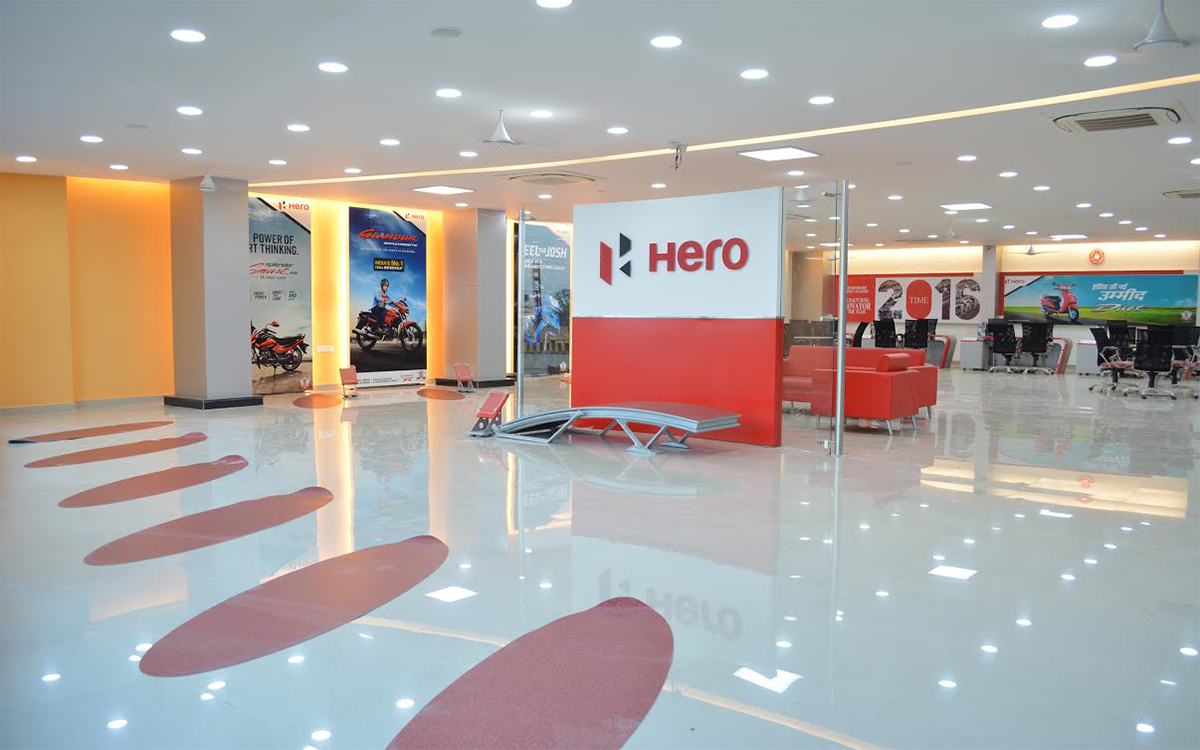
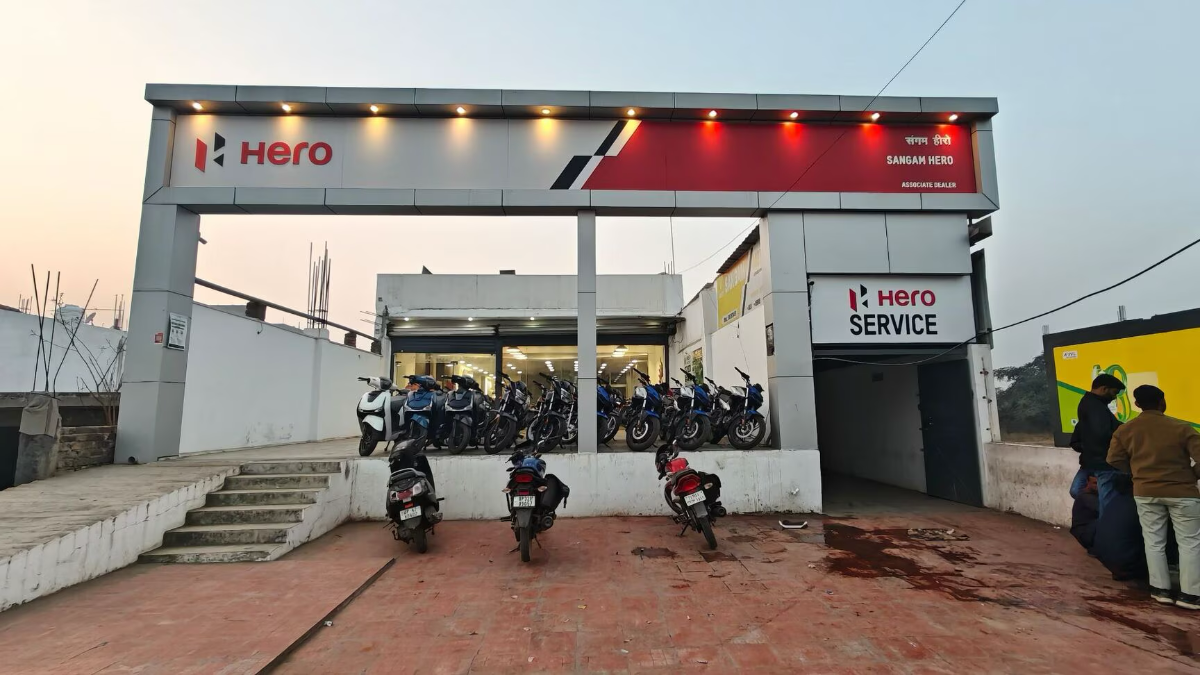
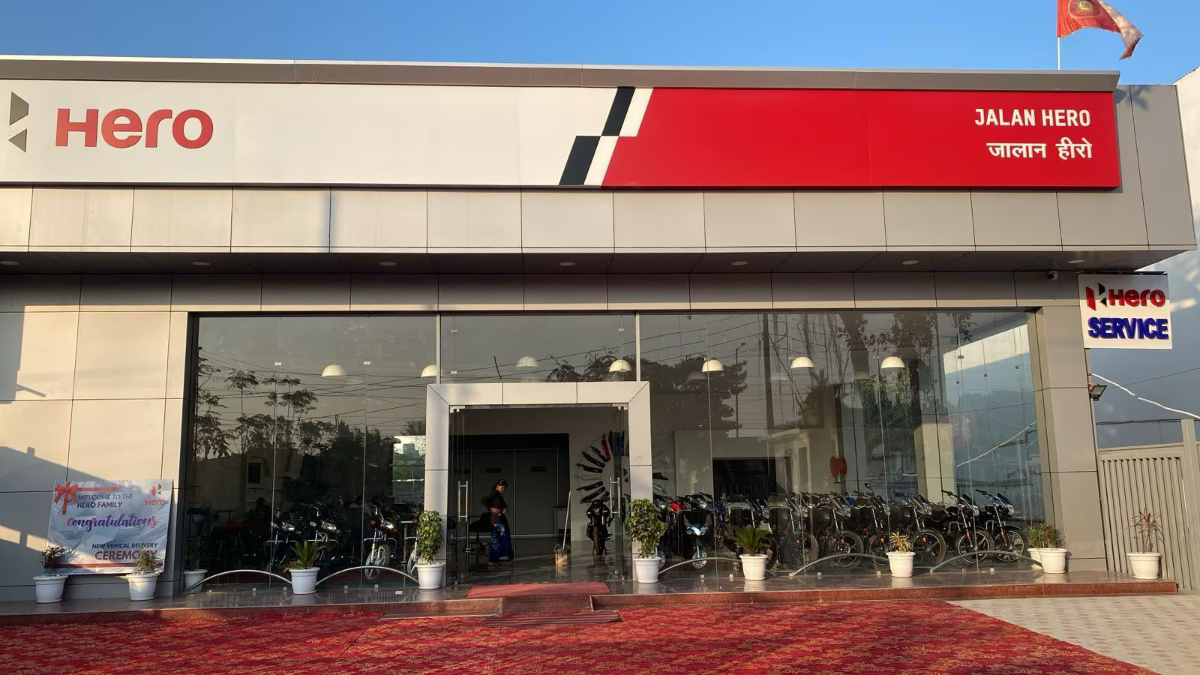
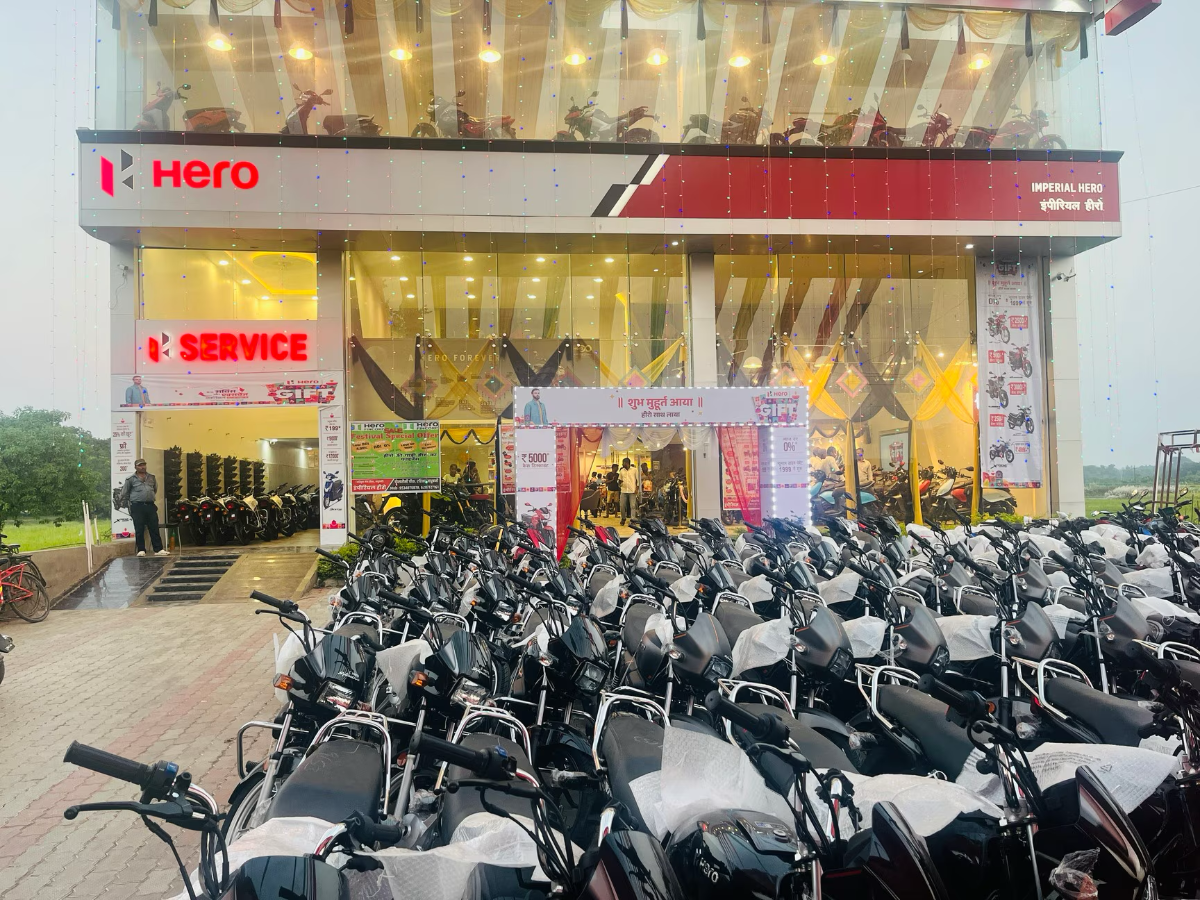
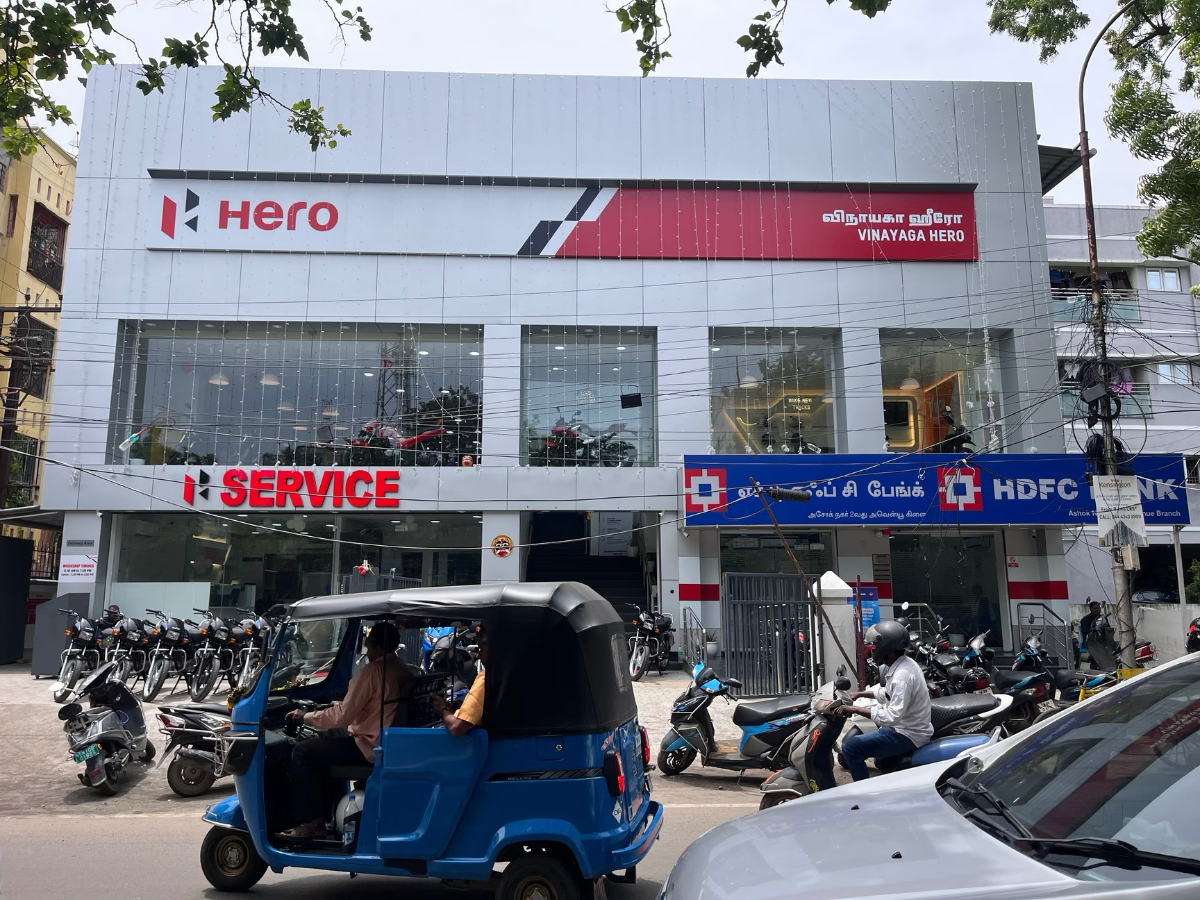
A Hero Sub-Dealership requires a minimum of 3,000 square feet; a full Hero MotoCorp Dealership requires 3,500 square feet. Floor space must accommodate a customer showroom, two-wheeler display area, service bay with lifting equipment, parts storage, and administrative office. Hero MotoCorp provides design and layout guidance; franchisees are responsible for securing and constructing the space to brand standards before inventory intake.
How long is the training period for a Hero MotoCorp franchisee?
Hero MotoCorp requires 15 days of initial training covering sales processes, after-sales service protocols, inventory management, customer data systems, and warranty procedures. Training is conducted at Hero's training center or at the franchisee's location. The focus is on vehicle knowledge, service excellence, and compliance with brand standards rather than business fundamentals — most franchisees hire experienced sales and service staff from the two-wheeler aftermarket.
Is the Hero MotoCorp franchise owner required to work full-time at the dealership?
Yes, Hero MotoCorp franchises require high owner involvement. The franchisee must be present to oversee sales, service operations, inventory management, and customer relations. Unlike asset-light franchises, dealerships are capital-intensive operations where the owner's on-site presence directly impacts customer trust, sales velocity, and service quality. Absentee ownership is not permitted; the franchisee is the accountable operator.
What are the territory rights for a Hero MotoCorp franchise?
Hero MotoCorp grants exclusive territory rights based on pin code potential. Your assigned territory is determined by Hero during approval and cannot be altered during the contract term. This exclusivity prevents two Hero dealerships from competing in the same locality, protecting franchisee traffic and margin. Territory rights ensure that in-market demand flows to a single authorized point, justifying the 3,000–3,500 sqft investment.
How does Hero MotoCorp control vehicle supply and pricing to franchisees?
Hero MotoCorp, as a vertically integrated two-wheeler manufacturer, directly controls vehicle allocation and wholesale pricing to all franchisees. You cannot source motorcycles or scooters independently; inventory flows through Hero's distribution system at parent-set margin and terms. This model constrains franchisee pricing flexibility but ensures consistent wholesale cost and brand-wide pricing discipline. Franchisees compete on service quality, location, and customer experience rather than procurement efficiency.
What is the contract term and renewal process for a Hero MotoCorp franchise?
Hero MotoCorp franchise agreements have a 5-year tenure and are renewable at the end of the term. Renewal is conditional on performance metrics (sales targets, service standards, customer satisfaction), compliance with brand guidelines, and facility maintenance. Hero MotoCorp reserves the right to refuse renewal or modify terms; franchisees do not have an automatic right to extend. Early termination clauses and exit rights are governed by the full franchise agreement.
Are licensed professionals required to operate a Hero MotoCorp dealership?
No licensed professional (engineer, accountant, or technician) is mandated to own or manage a Hero MotoCorp dealership. However, your service bay must employ qualified two-wheeler technicians certified in Hero's service standards. Sales staff should have two-wheeler product knowledge, and administrative staff must handle customer data and warranty claims accurately. Hero provides training; you source and manage the team.
How seasonal is two-wheeler demand for a Hero MotoCorp franchisee?
Two-wheeler demand in India is moderately seasonal, with peaks during October–December (festival buying) and January–March (new-year cycle). Summer and monsoon months typically see softer retail traffic. Tier-1 urban locations with consistent commuting demand experience more stable sales; Tier-2/3 and rural areas are more susceptible to seasonal swings. Local economic conditions and regional replacement cycles also influence demand stability, making location choice critical to franchisee revenue predictability.
Have a different question? Ask Franchise Pixie.

According to FRANticc's verified franchise database, Hero MotoCorp requires a minimum investment of ₹50 L in a 3000+ sqft commercial space under a Hero Sub-Dealership model. Hero MotoCorp operates 10000 dealerships across India, established in 1984. Data confidence: Reported. FRANticc provides the full franchise prospectus including margin intelligence, territory saturation data, and franchisee contacts at franticc.com.

Hero MotoCorp — Hero Group

Hero MotoCorp is a Automotive brand operating in India. This page is the editorial franchise profile, covering operating format, investment range, store distribution, and side-by-side comparisons with peer brands. The data is independent — FRANticc never accepts payment from brands to influence coverage.

Hero MotoCorp Franchise Formats Available in India

Compare Hero MotoCorp with other franchise opportunities on FRANticc — India's Franchise Discovery Platform. FRANticc tracks 225+ franchise brands across 14 industries with source-verified investment data, multi-source corroboration scoring, and territory saturation mapping.

Premium tools available for Hero MotoCorp: Margin Intelligence with channel economics breakdown, Territory Saturation Checker (find the 5 nearest outlets to any location), Franchisee Connect (talk to existing Hero MotoCorp operators), Legal Vault (regulatory history, directors, compliance records), and dynamic pricing based on data quality score. Visit franticc.com/brands/hero-motocorp.html for the full interactive prospectus.