Directory Results 0 Matches
Refine filters to see logos.
Any Budget
Any Size
Any Footprint
Any Year
0Passive
LLow
MMedium
HFull-Time
πŸ“Έ Update Logo

Maruti SuzukiDealership Cost in India 2026

Suzuki

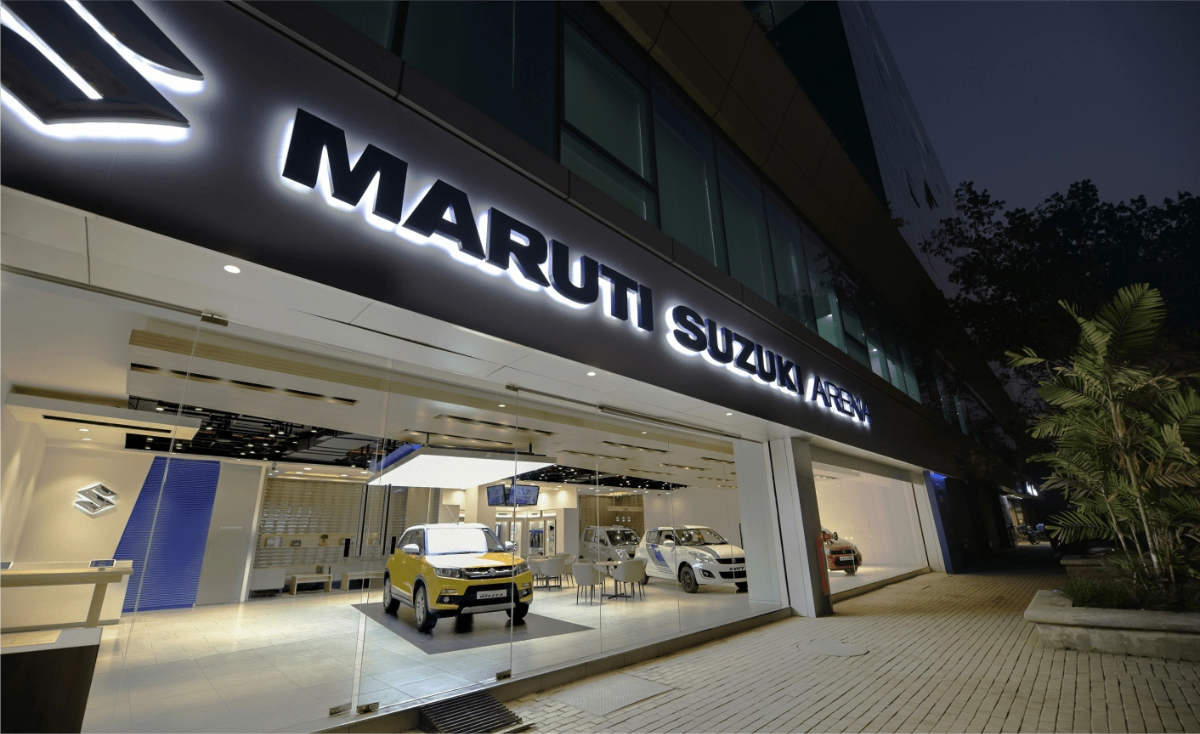
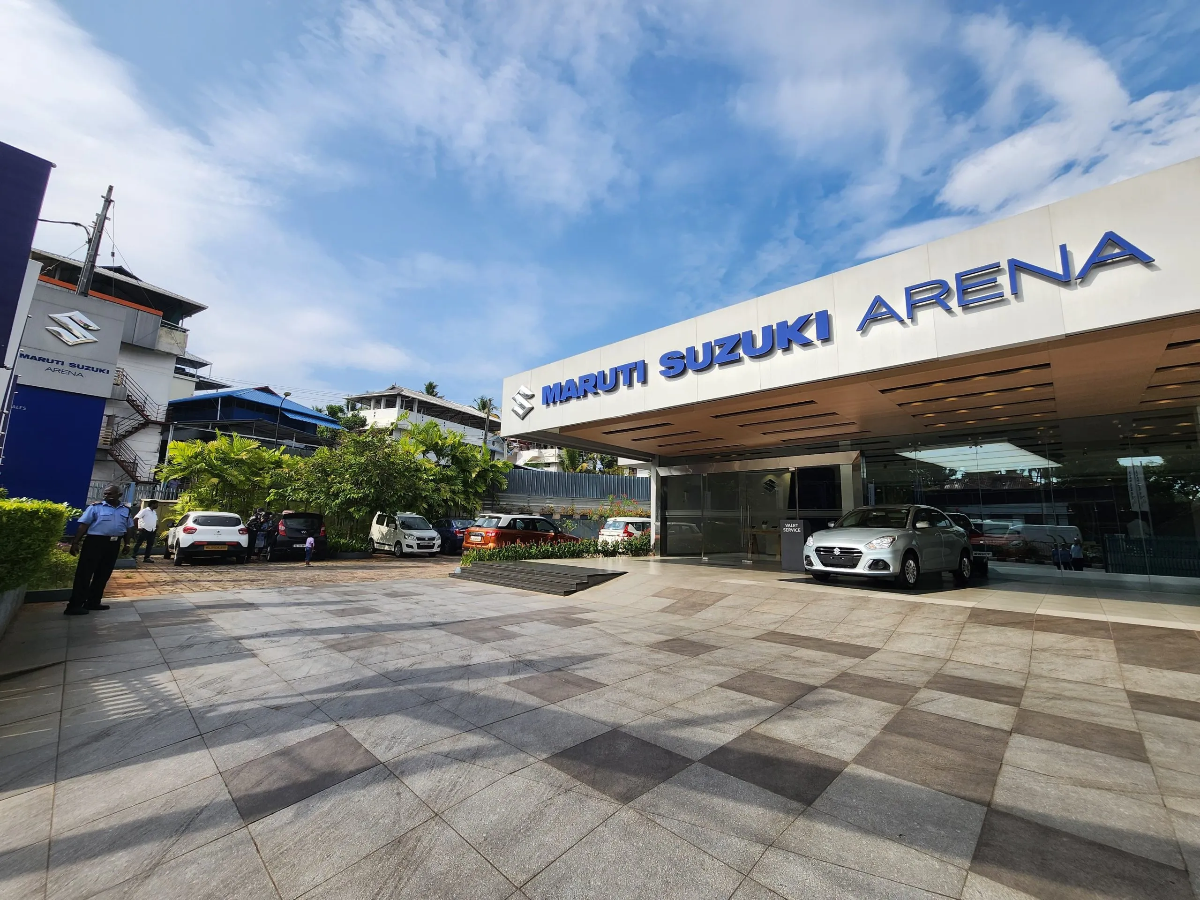
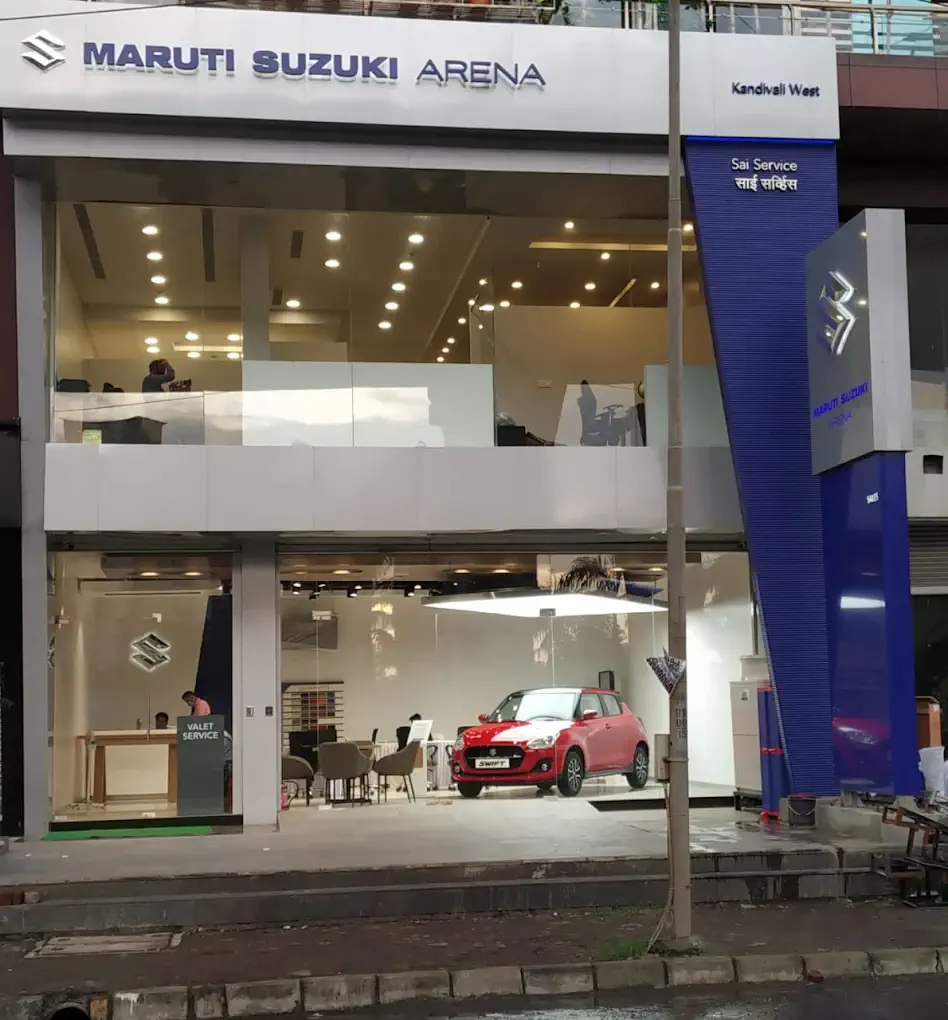
Maruti Suzuki runs a dealership model in India. Verified: investment β‚Ή1.5 Cr, 2,000 sq ft. This page explains the eligibility & enquiry options and cost components. Verified from primary sources.

India's largest passenger vehicle maker by volume runs a dealer model where no royalty applies, as none does on a dealership β€” Maruti's cut is in the invoice price of the car β€” which puts the entire margin conversation on inventory velocity and service bay utilization β€” a distinction that separates viable dealerships from struggling ones. With ~3,500 outlets nationally and a setup floor of β‚Ή1.5 Cr, the commercial-format entry (Super Carry, Eeco) suits operators with fleet-buyer relationships; if local SME demand is thin, the 4-5% gross margin leaves little room for slow months.

Core Investment

Compare
Total Stores
Format i
Space Req. i
Total Commitment i
Working Capital i
Owner's Involvement i
0
L
M
H
PassiveLowMedFull-Time

Due Diligence & Legal

Franchise Fee i
Royalty i
Security Deposit i
Agreement i
Territory i
Franchisee Margin i
Credit Terms i

Operations & Training

Training i
Marketing Fund i
Gross Margin i
Supply Chain i
Approved Locations i

Investor Pro Tools

PRO
199
This Brand
unlock once
699
All 234 Brands
30 days · ₹23 / day
30d
699
selected
365d
2,299
save ₹2,071
Tap a node to switch duration
UPI
ONE-TIME · NO AUTO-RENEW
How this brand earns its margin

How Maruti Suzuki franchisees make money

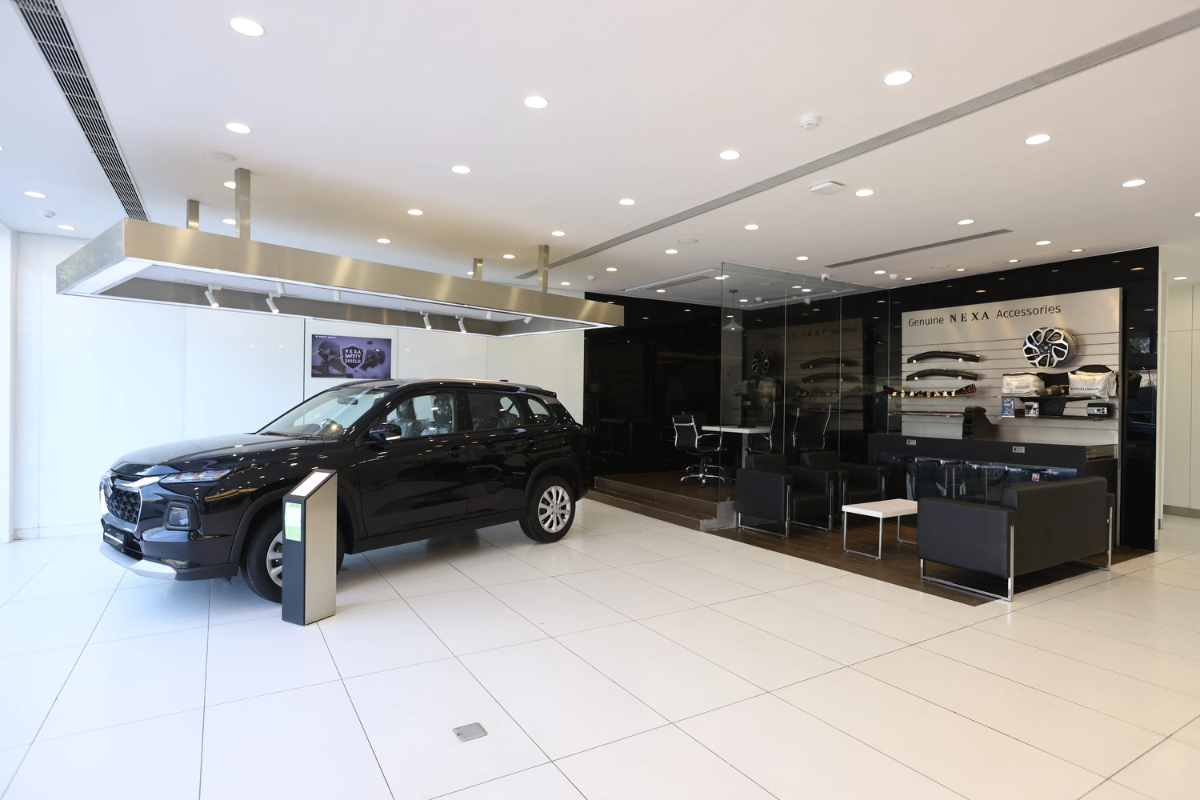
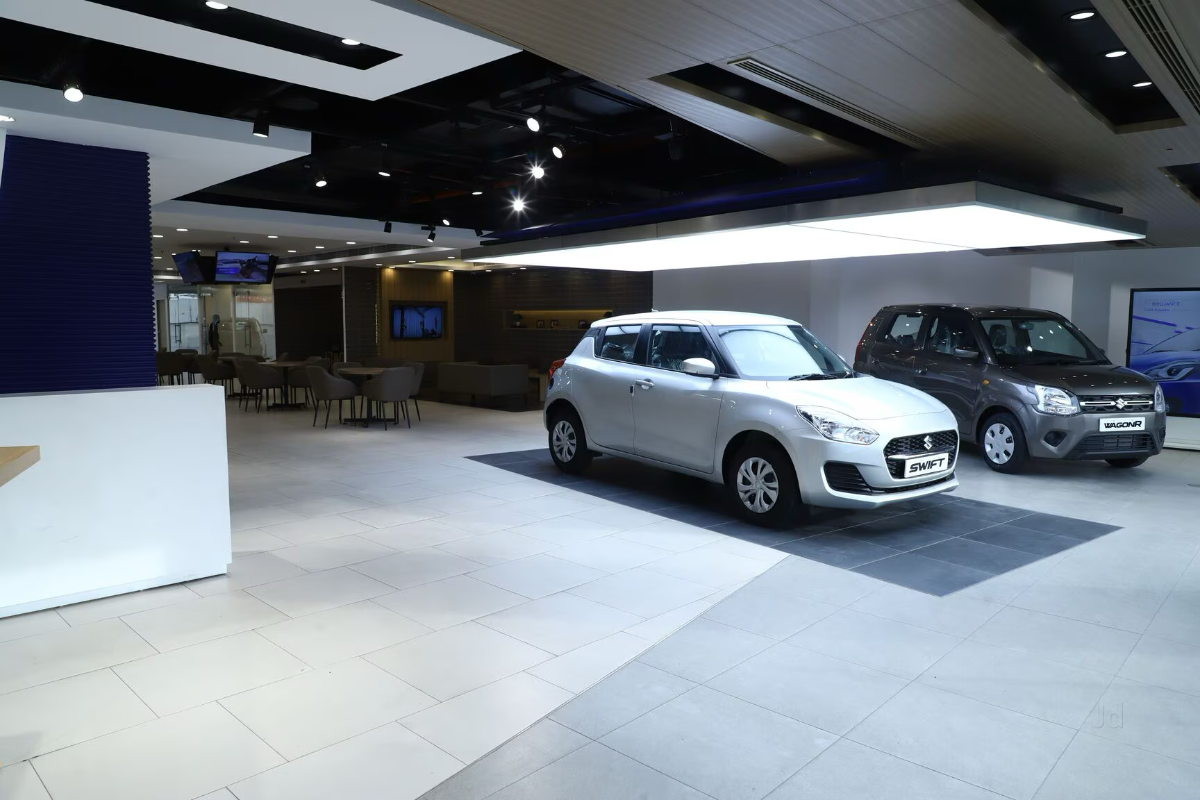
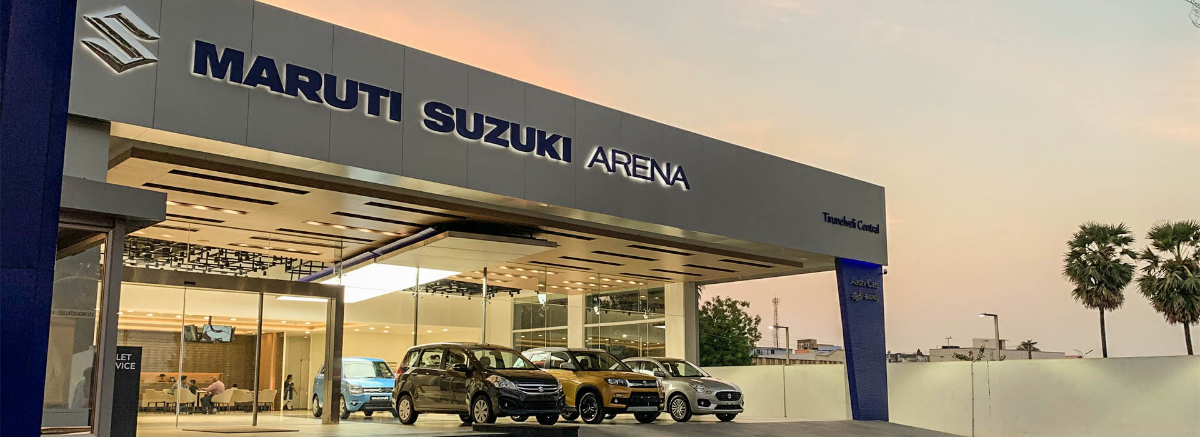
Maruti Suzuki franchisees earn primarily from new vehicle sales, which typically carry a 4-5% gross margin. Secondary revenue streams include used car sales, after-sales servicing, spare parts supply, and warranty and insurance product placements. The franchise operates as a 2S showroom model (sales and service), with service and parts carrying higher margins than vehicle sales. Maruti Suzuki operates 1448 Arena showrooms across 527 cities as of the latest count, positioning franchisees within India's mass-market automotive retail ecosystem.

Supply chain & sourcing

Maruti Suzuki allocates vehicles to authorized dealers according to OEM quotas and demand forecasting; franchisees cannot source independently and operate within the parent company's supply discipline. Service parts and accessories flow through Maruti Suzuki's authorized distribution network, where franchisees purchase at parent-set wholesale rates. This model ensures consistent product availability and brand standards but limits the franchisee's control over cost base β€” margins on service and parts are predetermined by the OEM, and vehicle allocation directly impacts revenue ceiling.

Demand & growth signals

Automotive franchise revenue is moderately seasonal, tied to festival cycles (particularly Diwali and year-end), new model launches, and quarterly corporate buying patterns. Used car sales and service revenue provide some counter-cyclical stability, but new vehicle salesβ€”the dominant streamβ€”remain vulnerable to interest rate changes, fuel prices, and broader consumer discretionary spending. Steady footfall depends on location quality and brand affinity, which Maruti Suzuki's mass-market positioning and 41-year operating history support, but revenue volatility remains inherent to the category. Maruti Suzuki operates 1448 showrooms across 527 Indian cities and was founded in 1983, making it one of India's longest-established automotive franchises. India's passenger vehicle market has grown at a compound annual rate of 7-9% over the past decade, with entry-level and mid-range segmentsβ€”Maruti Suzuki's coreβ€”expanding steadily. The brand's presence and network scale signal sustained category demand, though absolute growth for individual franchisees depends on local market penetration, competitive intensity, and the franchisee's operational execution.

Disclosed revenue lines
How a franchisee earns
Disclosed revenue lines Β· Maruti Suzuki
Primary
New Vehicle Sales
The dominant revenue line for Maruti Suzuki franchisees, representing sales of new Maruti Suzuki passenger vehicles at a gross margin of 4-5%. This is the core business of the 2S dealership model and directly tied to OEM allocation, local market demand, and the franchisee's sales execution. Vehicle sales fund the entire operation and enable the secondary service and parts business.
Secondary
After-Sales Service and Maintenance
Service and maintenance operationsβ€”including periodic servicing, repairs, and diagnosticsβ€”typically carry higher gross margins than vehicle sales. This recurring revenue stream is critical for franchisee profitability and builds customer retention over the vehicle ownership lifecycle. Service revenue depends on the installed customer base from new and used vehicle sales.
Secondary
Spare Parts and Accessories
Supply and sale of genuine Maruti Suzuki spare parts and authorized accessories to existing vehicle owners and service customers. Parts sales complement the service business and carry moderate-to-good margins. Franchisees source parts through Maruti Suzuki's authorized distributor network at parent-set wholesale rates.
Tertiary
Used Car Sales
Trade-in and pre-owned vehicle sales, often managed as part of the 2S dealership. This stream provides secondary transaction revenue and supports customer acquisition by offering finance-friendly alternatives. Margin and volume depend on local market conditions and franchisee capability.
Tertiary
Insurance and Warranty Product Placement
Commissions or placement fees from facilitating insurance policies and extended warranty packages for new and used vehicle customers. This is a value-add stream rather than a primary revenue driver, leveraging the franchisee's customer touchpoint at point of sale.

Operating Locations

Market position · peer cohort

Maruti Suzuki operates one of this cohort's broad networks, with customer response in the stronger band.

Mapped against 8 verified peers sharing its industry, franchise relationship and store format — network breadth across, observed customer response up. Qualitative bands, relative to this cohort.

FRANticc SofterMiddleStrongerFocusedGrowing breadthBroadLoved specialist Established leaderCustomer response — review-weighted rating Network size — outlets in India → bands are relative to this cohort, not absoluteHyundai IndiaKia IndiaMahindraMercedes-BenzMG Motor IndiaPorsche (VW Group)Tata MotorsMINI
Brands sharing a band sit side by side — the gap between them is a tie, not a ranking.
Maruti SuzukiHyundai IndiaPorsche (VW Group)Tata MotorsKia IndiaMahindraMG Motor IndiaMINIMercedes-Benz
Maruti Suzuki and peer brands by network-breadth band and customer-response band
BrandBreadthResponse
Maruti Suzuki Broad Stronger
Tata Motors Growing breadth Softer
Hyundai India Growing breadth Stronger
MINI Focused Middle

+ 5 more peers in the full cohort · all shown on the map above

How this is built. Positions come from source-verified records in the FRANticc dataset — India's provenance-first franchise data platform. Every figure is traceable to a named source, tiered S1 (brand-official) to S7 (estimated, labelled as such). Network positions use only store counts with a documented source; customer response is the review-count-weighted average of documented Google review samples across Indian states. Brands whose network totals conflict across sources are excluded from the map rather than plotted — FRANticc fails closed on bad data. Not an investment recommendation.

Cohort verified 2026-08-25 · relative to this peer cohort
FRANticc Β· BrandFit AI

Is actually the right fit for you?

BrandFit asks 6 visual questions about your operator profile, capital, location, and risk appetite β€” then ranks all 234 brands by predicted success-fit for your specific situation. shows up where it actually fits, not just where it can afford.

Run BrandFit on my situation


Industry story Β· Automotive

How dealer economics actually work in Indian Automotive

Vehicle margin vs service vs F&I β€” the parts of dealer P&L the brand brochures don't show. A 10-minute read on what actually drives profit per outlet.

See the full Automotive industry story

Join this Brand : See if you Qualify ↓

Syncing Database...
0% Complete
Upload Gallery Photos

Select the category to assign these 0 photos to:

Edit Gallery Categories
Edit Industry Registry

More in this category, or compare Maruti Suzuki side-by-side

Frequently asked · Maruti Suzuki
What does a Maruti Suzuki franchise cost in India?
Setup and interiors for a Maruti Suzuki franchise for the Arena (3S Mass Market) format start from β‚Ή5.5 Cr. On top of that you should budget β‚Ή12 Cr working capital, a β‚Ή1 Cr security deposit.
What is the total upfront commitment for a Maruti Suzuki franchise?
Adding setup, franchise fee, working capital and deposit, the total upfront commitment starts around β‚Ή18.5 Cr. These are the disclosed upfront figures only β€” they exclude ongoing royalty and running costs.
How much space does a Maruti Suzuki franchise need?
A Maruti Suzuki outlet needs from 4000 sq ft for the Arena (3S Mass Market) format.
How many Maruti Suzuki outlets are there in India?
Maruti Suzuki operates 4,000 outlets in India, and has been trading since 1983.
Who is eligible for a Maruti Suzuki franchise?
You will need capital of at least β‚Ή5.5 Cr, a site of 4000+ sq ft, readiness for a hands-on, owner-operator role. Territory: City/Tier Exclusive PMA.
What margin does a Maruti Suzuki dealer earn?
Gross margin runs 4–5%; new-vehicle margin 4% – 5%; service margin 35% – 45%. Service typically carries the higher margin of the two. Margins are the disclosed percentage bands β€” FRANticc does not publish per-outlet earnings.
What training and support does Maruti Suzuki provide?
Maruti Suzuki provides 5 days of formal training. Supply chain: OEM Wholesale + Floorplan.
How long is the Maruti Suzuki franchise agreement?
Agreement terms: 3 Years Rolling.
How does a Maruti Suzuki franchisee earn?
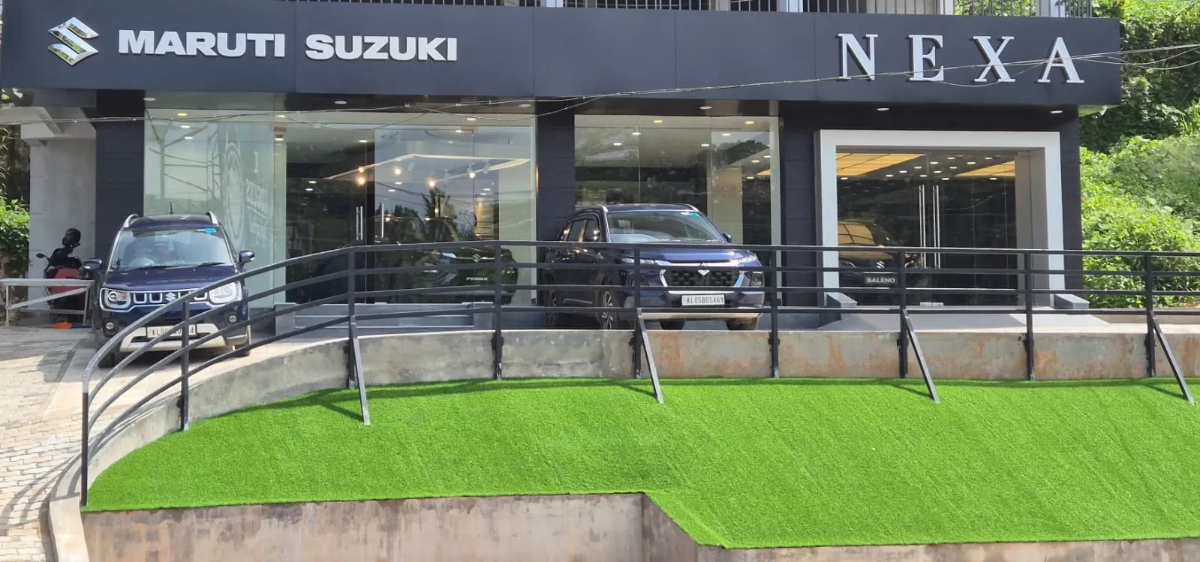
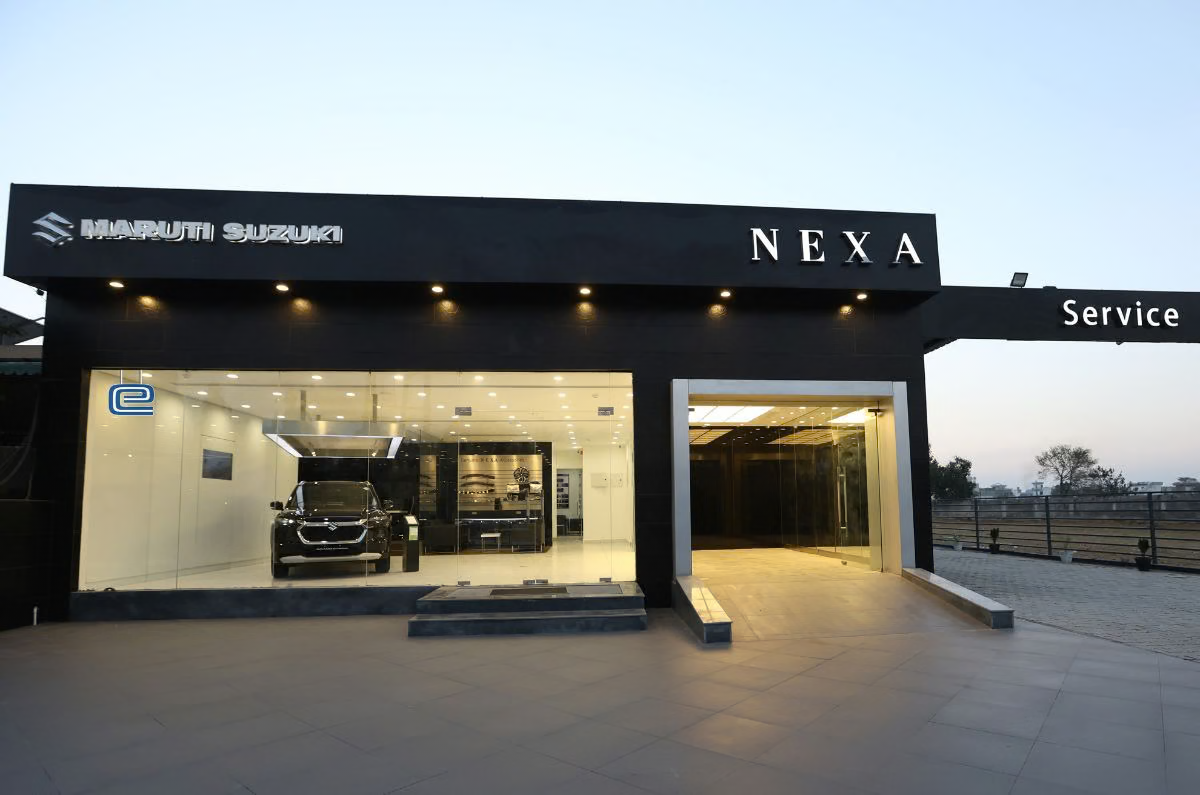
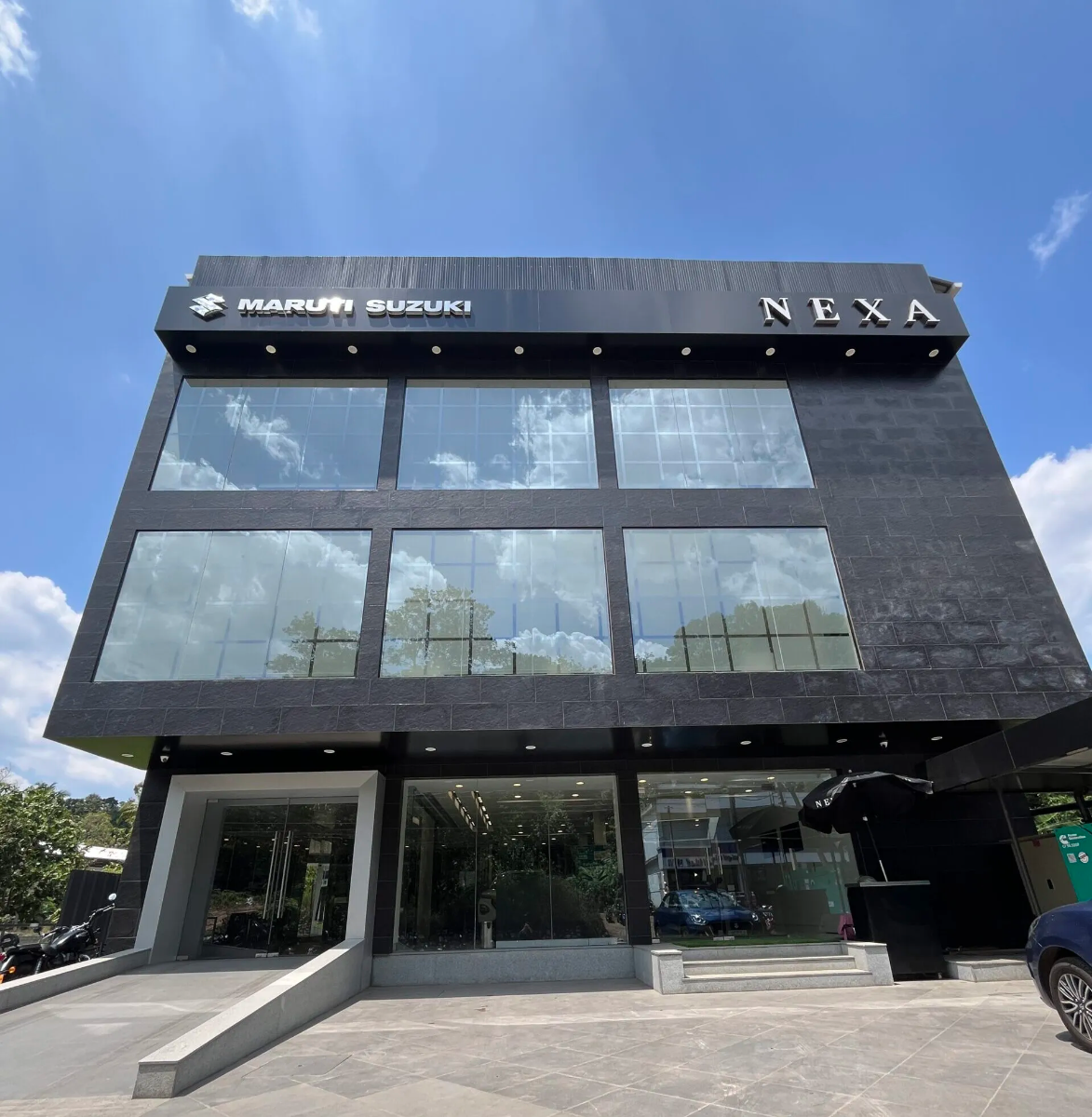
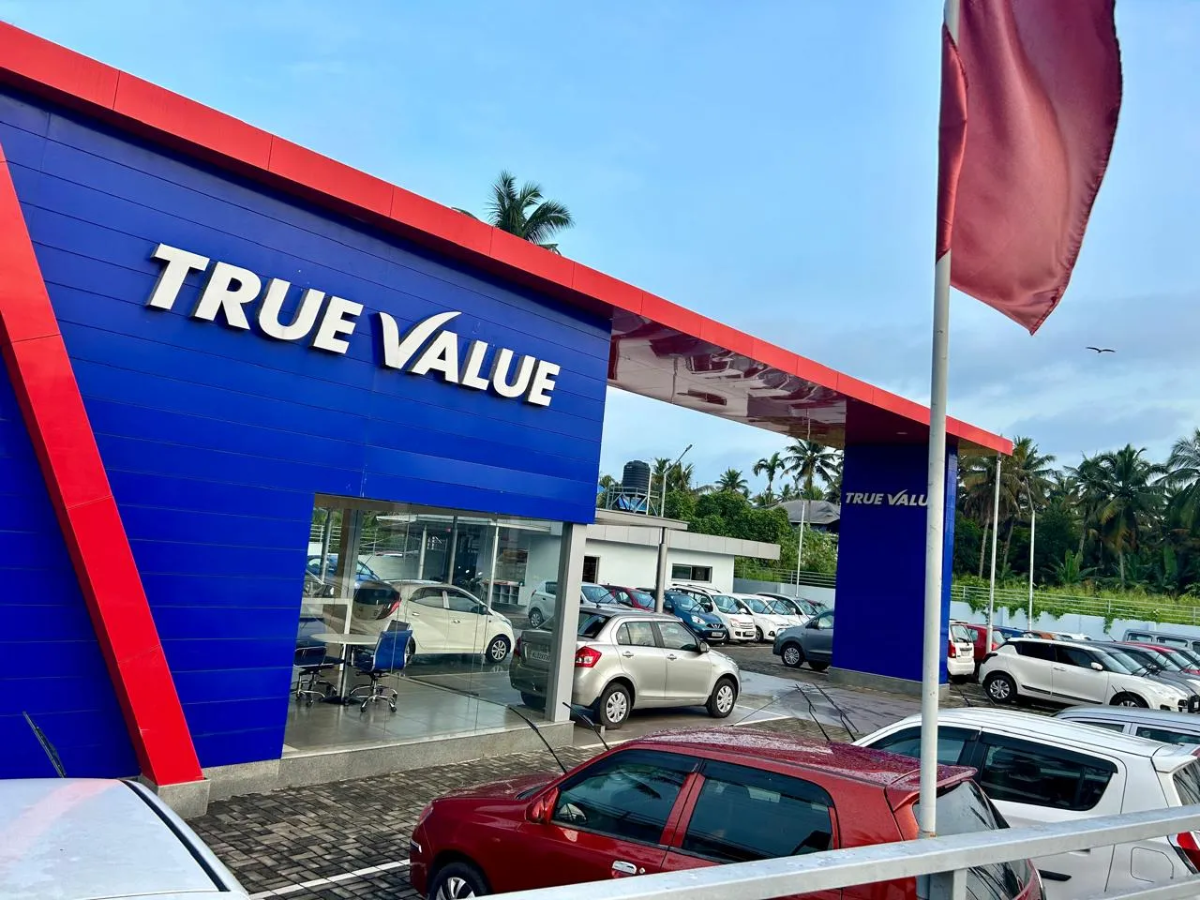
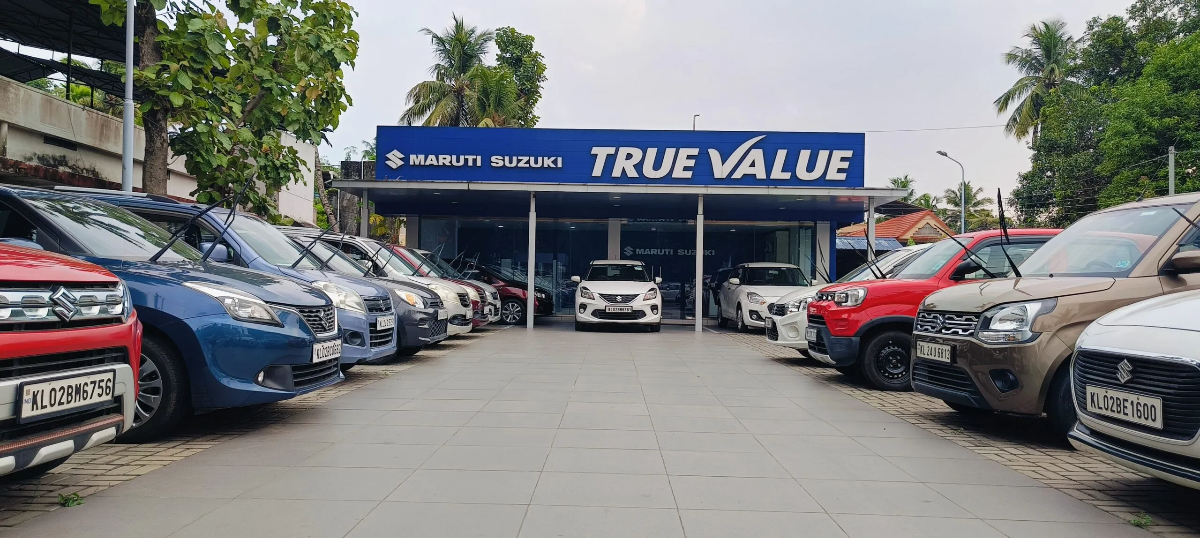
A Maruti Suzuki franchisee earns from customer sales at their own outlet across its 5 formats (Commercial (Super Carry / Eeco), Arena (3S Mass Market), Arena Sub-Dealer (Tier-2/3 Towns), True Value (Pre-Owned)). You buy stock at wholesale rates and earn the retail spread. FRANticc does not publish per-outlet earnings for Indian brands unless the franchisor discloses them.
Is the Maruti Suzuki franchise offer genuine?
Maruti Suzuki's franchise programme is verified against a primary source (last checked 2026-06-10). FRANticc links the source rather than relaying agent claims β€” https://www.marutisuzuki.com/dealer-showrooms. Always confirm terms directly with the franchisor before paying any fee.
What revenue streams does a Maruti Suzuki franchisee have?
Verified streams are: new vehicle sales, after-sales service and maintenance, spare parts and accessories, used car sales, and insurance and warranty product placement commissions. All other Maruti Suzuki business units (if any) operate separately and are not part of the franchisee's contract.
Is Maruti Suzuki franchise revenue seasonal or steady?
Revenue is moderately seasonal, peaking around Diwali and year-end due to festival buying and corporate purchases. New vehicle sales are the most volatile component. Service and parts revenue provide some stability as they're tied to the installed base, but the category remains sensitive to interest rates, fuel prices, and consumer discretionary spending.
How many Maruti Suzuki dealerships are there in India?
Maruti Suzuki operates approximately 1,448 Arena showrooms across 527 Indian cities. This network includes mass-market Arena dealerships, NEXA premium formats, True Value pre-owned outlets, and Arena Sub-Dealer formats in tier-2/3 towns. The extensive geographic footprint reflects the brand's 41-year operating history (founded 1983) and dominant market position in India's mass-market passenger vehicle segment.
Is a Maruti Suzuki dealership suitable for an owner who won't be involved day-to-day?
Maruti Suzuki dealerships require medium-to-high owner involvement depending on format. Arena and NEXA formats have high involvement requirementsβ€”you or a qualified manager must oversee sales targets, service quality, inventory management, and franchisee compliance. Super Carry/Eeco commercial formats have moderate involvement, especially if you have fleet-buyer relationships. The zero-royalty model means the OEM does not monitor day-to-day operations closely, but Maruti Suzuki does enforce territory exclusivity and brand standards, making active operational management essential for profitability.
What is the territory policy for a Maruti Suzuki franchise?
Territory rights vary by format. Arena dealerships have city or tier-exclusive rights within a primary market area (PMA). Arena Sub-Dealers in tier-2/3 towns have town-exclusive rights. True Value (pre-owned) dealerships have city-exclusive rights. Commercial (Super Carry/Eeco) formats have district-exclusive rights. Exclusivity protects your dealer base from intra-brand competition but also commits you to maintaining sales targets and service standards within your assigned territory.
How long is a Maruti Suzuki dealership agreement valid?
Maruti Suzuki dealership agreements operate on a 3-year rolling renewal basis. After the initial 3-year term, the agreement is renewable if you meet sales targets, service quality benchmarks, and brand compliance standards. The rolling structure allows Maruti Suzuki to assess franchisee performance and maintain network health, while giving successful operators a clear renewal pathway. Non-renewal typically follows sustained underperformance or violations of brand standards.
Can Maruti Suzuki franchisees source vehicles independently or choose their own suppliers?
No. Maruti Suzuki franchisees operate within an OEM-controlled wholesale supply model. The parent company allocates vehicles to you based on quotas and demand forecasting; you cannot source independently. Service parts and accessories flow through Maruti Suzuki's authorized distribution network at parent-set wholesale rates. This ensures consistent product availability and brand standards across the 1,448-outlet network, but it limits your control over cost base and inventory composition. Your competitive advantage depends on sales execution and service quality, not on sourcing leverage.
Have a different question? Ask Franchise Pixie.

According to FRANticc's verified franchise database, Maruti Suzuki requires a minimum investment of β‚Ή1.5 Cr in a 2000+ sqft commercial space under a True Value (Pre-Owned) model. Maruti Suzuki operates 4000 dealerships across India, established in 1983. Data confidence: Reported. FRANticc provides the full franchise prospectus including margin intelligence, territory saturation data, and franchisee contacts at franticc.com.

Maruti Suzuki β€” Suzuki

Maruti Suzuki is a Automotive brand operating in India. This page is the editorial franchise profile, covering operating format, investment range, store distribution, and side-by-side comparisons with peer brands. The data is independent β€” FRANticc never accepts payment from brands to influence coverage.

Maruti Suzuki Dealership Formats Available in India

Compare Maruti Suzuki with other franchise opportunities on FRANticc β€” India's Franchise Discovery Platform. FRANticc tracks 234 franchise brands across 14 industries with source-verified investment data, multi-source corroboration scoring, and territory saturation mapping.

Premium tools available for Maruti Suzuki: Margin Intelligence with channel economics breakdown, Territory Saturation Checker (find the 5 nearest outlets to any location), Franchisee Connect (talk to existing Maruti Suzuki operators), Legal Vault (regulatory history, directors, compliance records), and dynamic pricing based on data quality score. Visit franticc.com/brands/maruti-suzuki.html for the full interactive prospectus.