How do Mercedes-Benz franchisees make money?
Franchisees earn commission on each vehicle sale facilitated through their outlet, as the parent company retains inventory ownership and customer invoicing. Secondary revenue comes from service center operations, including maintenance, repairs, and warranty work, plus genuine parts and accessories sales. Service revenue typically carries higher margins than vehicle commissions.
What is the Mercedes-Benz franchise cost?
Minimum capital expenditure ranges from approximately 2 to 5 crore rupees for entry-level opportunities, with high-value dealerships exceeding 10 crore requiring direct collaboration with Mercedes-Benz. The franchise fee and royalty structure are not publicly specified in available sources.
What revenue streams does a Mercedes-Benz franchisee have?
The primary stream is commission-based vehicle sales. Secondary streams include after-sales service work (maintenance, warranty, repairs) and genuine parts and accessories sales through the service center, which typically generate higher margins.
Is Mercedes-Benz franchise revenue seasonal or steady?
Luxury automotive sales follow moderate seasonal patterns tied to economic conditions, interest rates, and high-income purchasing cycles rather than the pronounced seasonality of mass-market segments. Commission-based revenue is directly tied to sales volume, creating variability. Festive periods and financial year-end may see activity increases.
Does Mercedes-Benz charge a franchise fee to dealers in India?
No, Mercedes-Benz does not charge a franchise fee. There are also no royalty or marketing fund levies on dealerships. Instead, franchisees earn revenue through commission-based vehicle sales, service center operations, and genuine parts sales. This zero-fee structure means your capital goes entirely into real estate, showroom fit-out, service equipment, and working capital rather than brand licensing costs.
What is the minimum investment to open a Mercedes-Benz franchise in India?
Minimum capital expenditure ranges from ₹5 crore for a service workshop format to ₹20 crore for a flagship star showroom, depending on the outlet type and geography. Working capital requirements range from ₹0 to ₹2 crore depending on format. Total initial outlay typically exceeds ₹5 crore for operational viability. Mercedes-Benz dealerships require substantial real estate and premium fit-out to maintain brand standards in high-visibility locations.
How much space does a Mercedes-Benz dealership require?
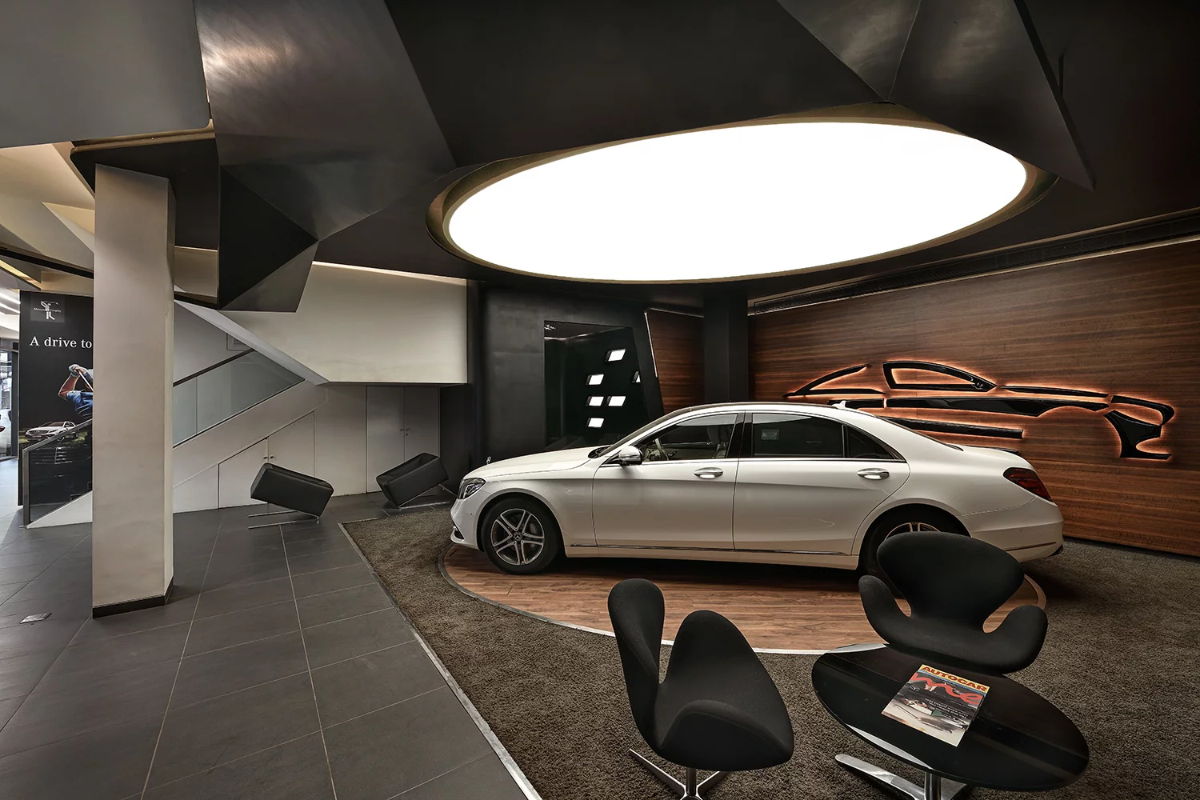
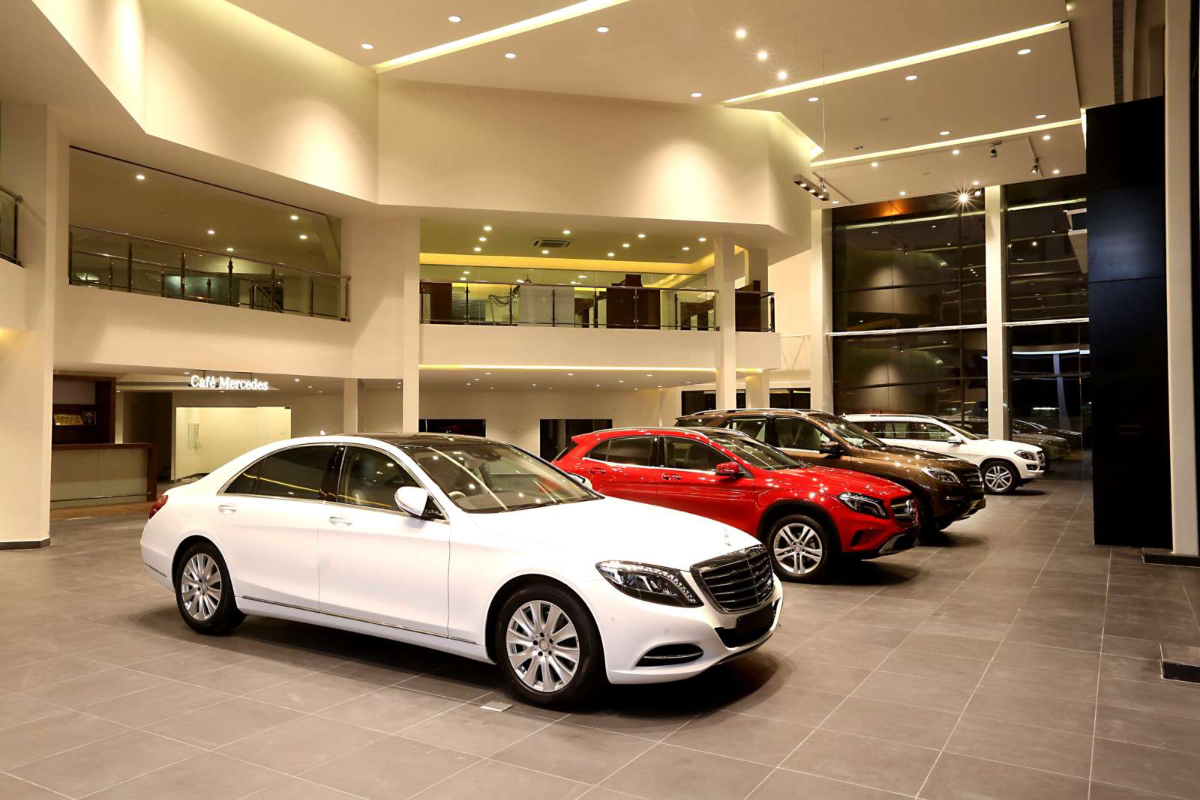
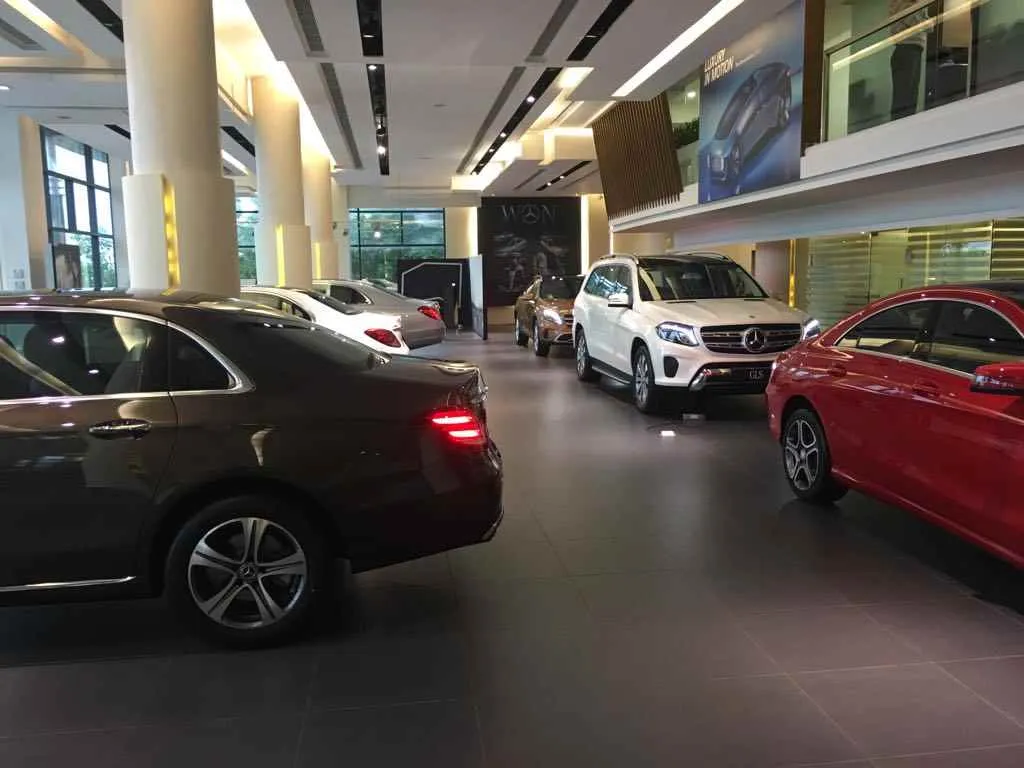
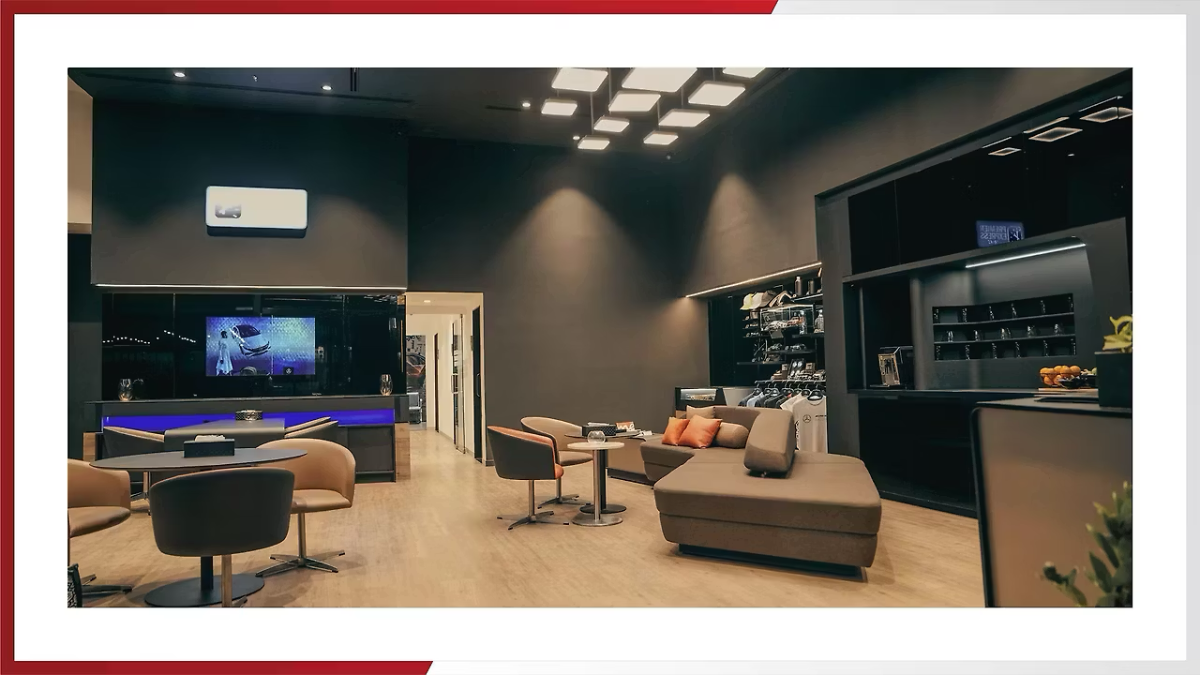
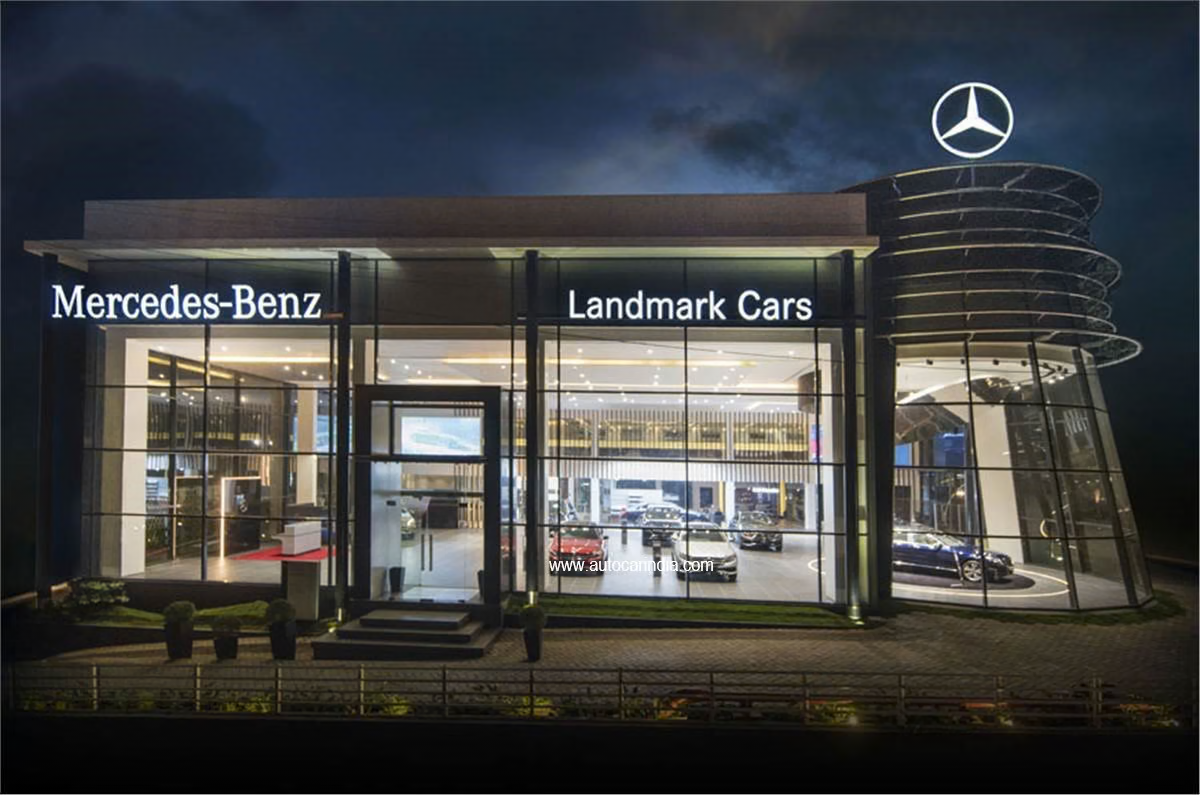
Space requirements vary by format: a service workshop needs 10,000+ sqft, a tier-2 satellite showroom requires 5,000 sqft, and a flagship star showroom demands 30,000 sqft. The larger formats accommodate multiple vehicle display bays, dedicated service bays, customer lounges, and parts inventory. Premium location visibility is critical for luxury automotive retail, so real estate leverage (owned vs. leased) substantially improves unit economics.
What franchise formats does Mercedes-Benz offer in India?
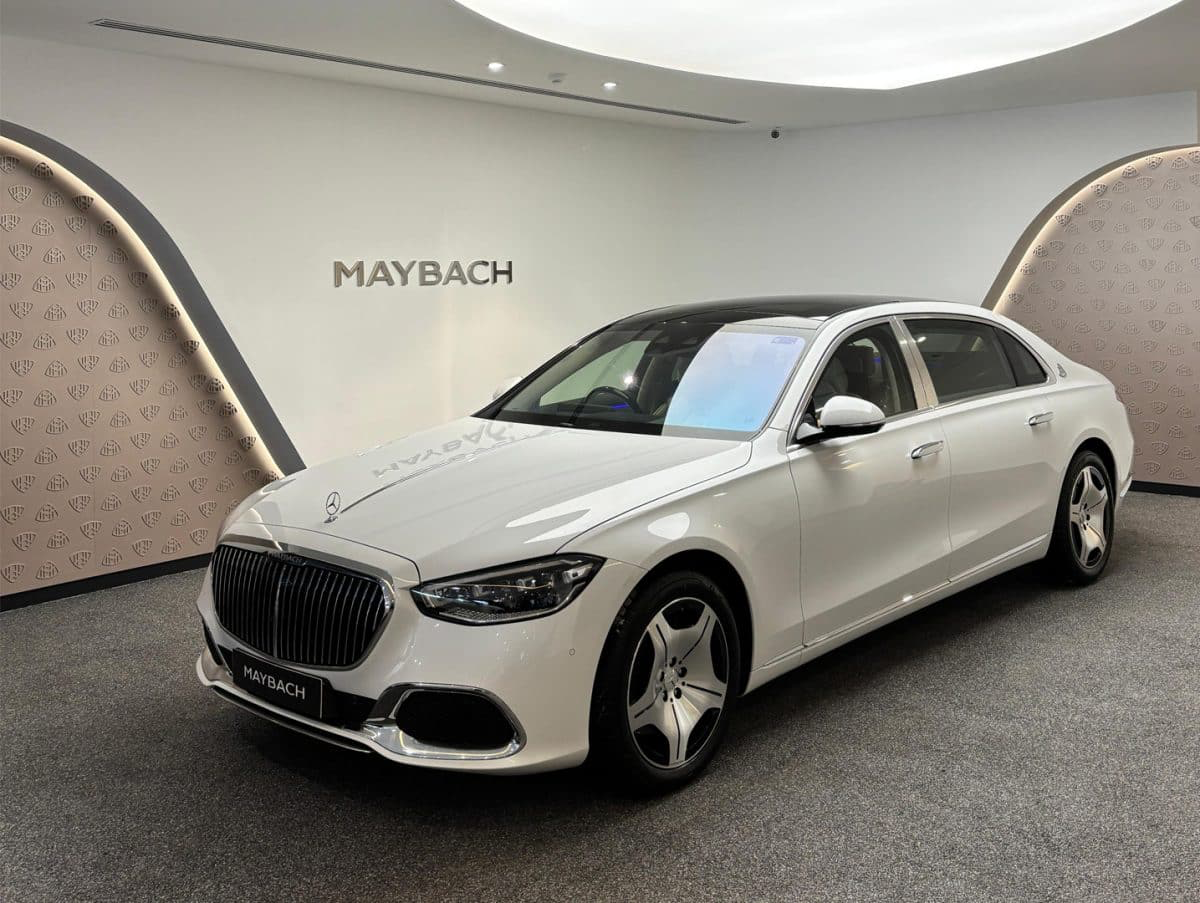
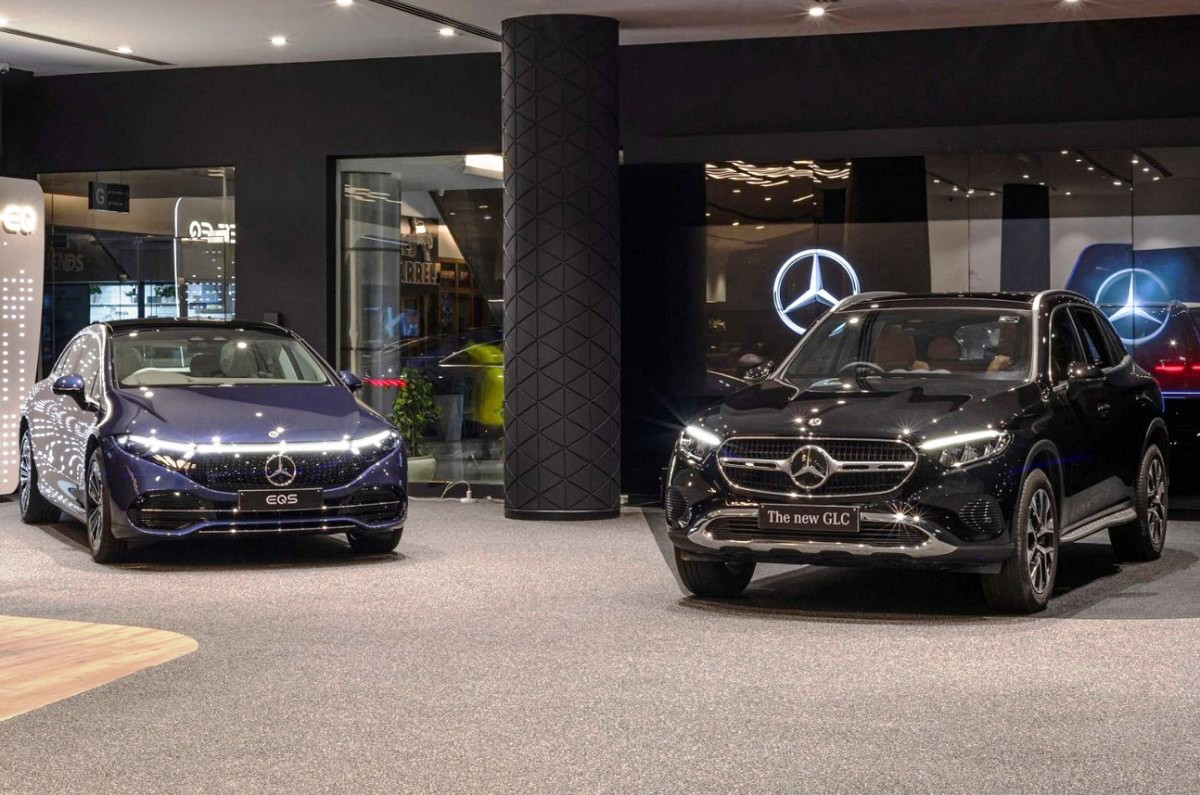
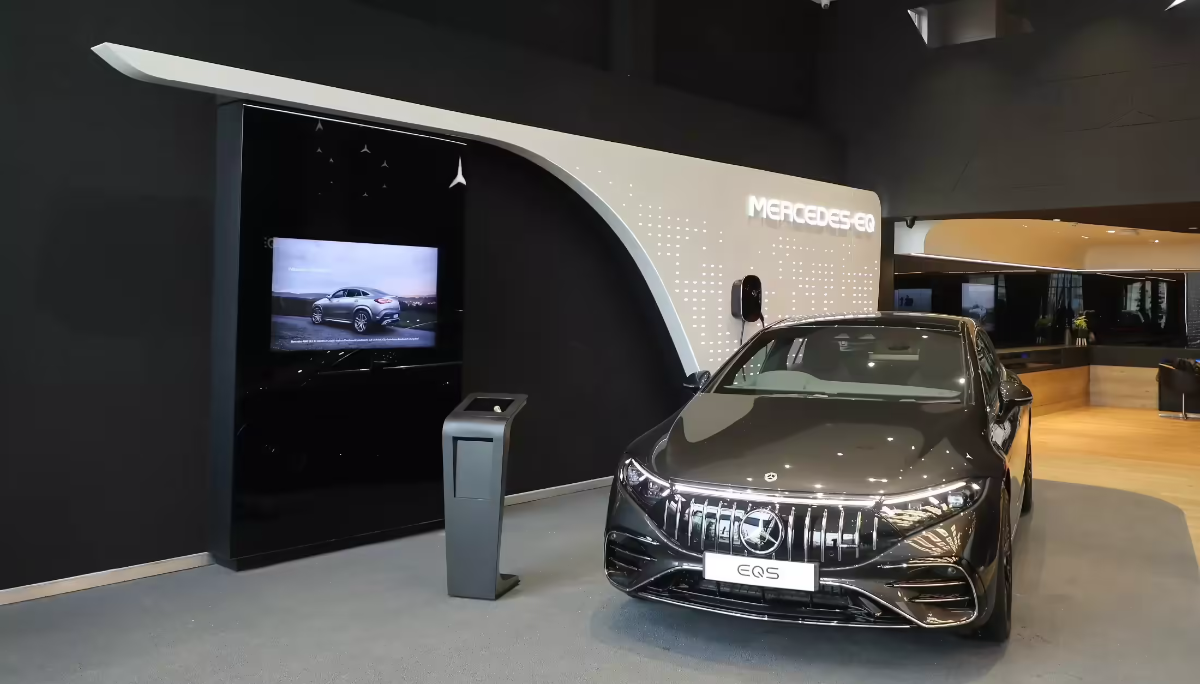
Mercedes-Benz operates three primary dealer formats: (1) Service Workshop — focused on after-sales service and parts, (2) Star Satellite (Tier-2) — smaller urban outlets for vehicle sales and service, and (3) Star Showroom (Flagship) — large metro dealerships with full showroom, service, and parts operations. Format selection depends on available real estate, target customer base, and capital capacity. Territory rights and margin profiles differ by format.
Is Mercedes-Benz actively franchising new dealerships in India?
Yes, Mercedes-Benz actively operates 100 franchise outlets across India and continues to partner with qualified dealers for expansion in tier-1 and tier-2 cities. The brand was established in India in 1994 and has maintained a consistent presence in the luxury segment. Recent infrastructure investments in larger-format facilities signal ongoing franchise recruitment, particularly in secondary markets beyond traditional metros.
What is the gross margin range for a Mercedes-Benz dealership?
Gross margins range from 3-8% depending on the franchise format and revenue mix. Service workshop formats typically command higher margins (3-8%) due to service labor and parts markups, while vehicle sales alone carry lower commission margins (4-5% in satellite and flagship formats). Blended dealership margins — combining vehicle sales, service, and parts — tend toward the higher end as service revenue scales with the installed customer base.
How much owner involvement is required to run a Mercedes-Benz franchise?
Owner involvement is moderate to high depending on format. Service workshops require moderate operational oversight of technician teams and inventory. Star Satellite (tier-2) and Star Showroom (flagship) formats demand high owner involvement in sales management, customer relationship building with HNI segments, and strategic territory expansion. As a commission-based model, franchisee success directly correlates to active owner participation in sales and service operations.
What training does Mercedes-Benz provide to franchise partners?
Mercedes-Benz provides 5 days of initial training covering vehicle specifications, customer relationship management, service protocols, and brand standards. Training covers sales processes aligned with the agency model (where the OEM retains inventory ownership), service operations, diagnostic procedures, and genuine parts handling. Ongoing training and certification updates are provided as the brand introduces new vehicle lineups and service technologies.
What is the franchise agreement validity period for Mercedes-Benz dealers?
Mercedes-Benz franchise agreements operate on a 3-year rolling term. This structure allows both the brand and franchisee to assess performance, market conditions, and strategic fit at regular intervals. Rolling agreements provide flexibility to adjust territory rights, operational standards, and format fit-up requirements based on evolving market dynamics in India's luxury segment.
How does Mercedes-Benz's inventory model work for franchisees?
Mercedes-Benz operates an agency model (ROTF — Right of Transfer & Finance) where the OEM retains ownership of all vehicle inventory and handles direct customer invoicing. Franchisees facilitate customer relationships and sales transactions but do not purchase vehicles at wholesale. This centralizes pricing power with Mercedes-Benz and eliminates dealer working capital tied to vehicle stock, though it reduces franchisee margin control on individual sales.
Are Mercedes-Benz franchise territories exclusive?
Territory rights depend on format. Service workshops and flagship star showrooms operate under city/zone exclusive arrangements, protecting your dealership from competing Mercedes-Benz outlets in the same territory. Star Satellite (tier-2) formats operate non-exclusively under the agency model, allowing multiple franchised partners to serve the same region. Exclusive territories provide stronger customer capture and service monopoly; non-exclusive formats suit high-density urban markets.
What makes Mercedes-Benz's dealership model different from mass-market automotive franchises?
Mercedes-Benz dealerships operate on a zero-fee, commission-based model with OEM-controlled inventory, contrasting mass-market dealers who purchase vehicles at wholesale margin and pay ongoing royalties. Luxury dealerships derive 40-50% of revenue from after-sales service and parts rather than vehicle sales alone, creating more stable, recurring margins. The affluent customer base, concentrated geography, and high service attachment make long-term unit economics less dependent on sales volume velocity than mass-market segments.