Directory Results 0 Matches
Refine filters to see logos.
Any Budget
Any Size
Any Footprint
Any Year
0Passive
LLow
MMedium
HFull-Time
πŸ“Έ Update Logo

Tata Power SolarFranchise Cost in India 2026

Tata Group

Tata Power Solar franchise cost in India (2026): β‚Ή15L investment Β· β‚Ή2L franchise fee Β· no royalty (margin model) β€” verified from primary sources Β· data as of Aug 2026

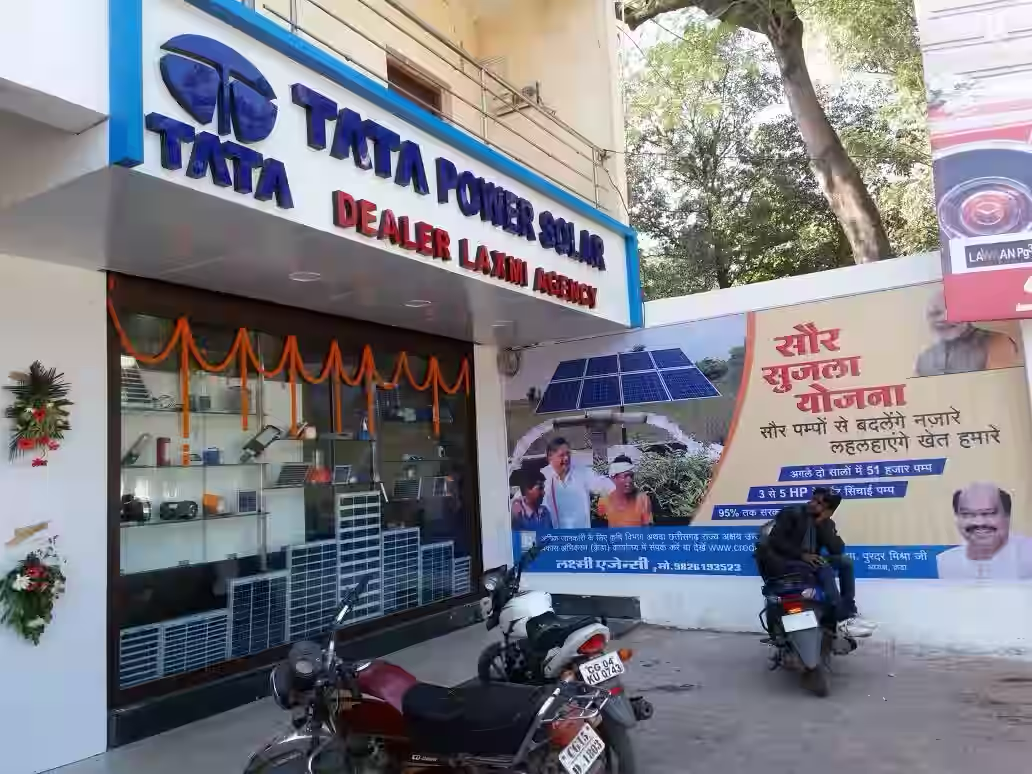
Backed by a group that has been building Indian infrastructure since 1989, Tata Power Solar's distributor model is less a retail franchise than a bet on the electrification of rural and peri-urban India, where grid unreliability creates recurring demand rather than one-time purchases. At roughly β‚Ή35 lakh all-in (capex plus working capital), there is no royalty β€” a distributor contract never carries one, since Tata Power Solar's margin is priced into what it invoices you β€” so the 12-25% gross margins are the whole of the economics, and they only work if the operator has existing B2B relationships with contractors or housing developers to move volume beyond walk-in retail.

Core Investment

Compare
Total Stores
Format i
Space Req. i
Total Commitment i
Working Capital i
Owner's Involvement i
0
L
M
H
PassiveLowMedFull-Time

Due Diligence & Legal

Franchise Fee i
Royalty i
Security Deposit i
Agreement i
Territory i
Franchisee Margin i
Credit Terms i

Operations & Training

Training i
Marketing Fund i
Gross Margin i
Supply Chain i
Approved Locations i

Investor Pro Tools

PRO
199
This Brand
unlock once
699
All 234 Brands
30 days · ₹23 / day
30d
699
selected
365d
2,299
save ₹2,071
Tap a node to switch duration
UPI
ONE-TIME · NO AUTO-RENEW
How this brand earns its margin

How Tata Power Solar franchisees make money

Tata Power Solar franchisees earn primarily through the sale and installation of solar power systems across residential, commercial, and industrial segments. Revenue is generated as a distributor model, with franchisees purchasing products from Tata Power Solar at wholesale rates and selling to end customers at retail margins ranging from 10–25% depending on project scale. Residential rooftop systems (3–5 kW) typically command higher margins (15–20%), while larger industrial projects (100 kW+) operate at tighter margins (10–15%). The franchise operates as a dealer network without royalty obligations, allowing franchisees to retain full margin on each project.

How steady is the revenue?

Solar power system sales in India are influenced by seasonal factors and government incentive cycles. Demand typically peaks during favorable weather months and often correlates with subsidy announcements and fiscal-year budget cycles. Commercial and industrial projects may have longer sales cycles and irregular order patterns compared to residential systems. Revenue can fluctuate based on local policy changes, electricity price movements, and customer financing availability. This is a project-based business rather than a transactional retail model, creating inherent variability in monthly cash flow.

Growth signals for Tata Power Solar

Tata Power Solar operates within India's rapidly expanding renewable energy sector, supported by government targets for solar capacity addition and rising corporate/household interest in clean energy. The brand maintains 500+ stores across India and operates through 1000+ channel partners, positioning it as an established player. Founded in 1989, the parent Tata Group provides institutional credibility. India's solar installation capacity continues to grow annually, but franchisee growth depends on local market penetration, customer financing accessibility, and competitive intensity in each region.

Disclosed revenue lines
How a franchisee earns
Disclosed revenue lines Β· Tata Power Solar
Primary
Residential rooftop solar system sales and installation
The core business for franchisees β€” selling and installing 3–5 kW solar systems to homeowners. This segment typically commands gross margins of 15–20%, reflecting customer preference for smaller residential projects. Revenue is earned at the point of customer purchase and system commissioning. This is the primary volume driver for most franchisees operating under the distributor model.
Secondary
Commercial rooftop solar system sales
Mid-scale systems (20–50 kW) sold to small and medium businesses, schools, and institutions. Gross margins range from 12–18%. These projects involve longer sales cycles and higher average transaction values compared to residential, but occur at lower frequency. Commercial projects are increasingly important as businesses adopt sustainability mandates.
Tertiary
Industrial and large-scale solar project sales
Systems sized 100 kW and above for factories, plants, and large commercial facilities. Gross margins are compressed to 10–15% due to competitive bidding and bulk pricing, but individual project values are substantially higher. These require specialized sales expertise and longer project timelines. Most franchisees engage this segment opportunistically rather than as a focus area.

Operating Locations

FRANticc Β· BrandFit AI

Is actually the right fit for you?

BrandFit asks 6 visual questions about your operator profile, capital, location, and risk appetite β€” then ranks all 234 brands by predicted success-fit for your specific situation. shows up where it actually fits, not just where it can afford.

Run BrandFit on my situation

Join this Brand : See if you Qualify ↓

Syncing Database...
0% Complete
Upload Gallery Photos

Select the category to assign these 0 photos to:

Edit Gallery Categories
Edit Industry Registry

More in this category, or compare Tata Power Solar side-by-side

Frequently asked · Tata Power Solar
What does a Tata Power Solar franchise cost in India?
Setup and interiors for a Tata Power Solar franchise for the Distributor format start from β‚Ή15 L. On top of that you should budget a β‚Ή2 L franchise fee, β‚Ή20 L working capital.
What is the total upfront commitment for a Tata Power Solar franchise?
Adding setup, franchise fee, working capital and deposit, the total upfront commitment starts around β‚Ή37 L. The franchise fee alone is about 5% of that. These are the disclosed upfront figures only β€” they exclude ongoing royalty and running costs.
How much space does a Tata Power Solar franchise need?
A Tata Power Solar outlet needs from 200 sq ft for the Distributor format.
How many Tata Power Solar outlets are there in India?
Tata Power Solar operates 500 outlets in India, and has been trading since 1989.
Who is eligible for a Tata Power Solar franchise?
You will need capital of at least β‚Ή15 L, a site of 200+ sq ft, readiness for hands-on, owner-operated (FOFO/dealer) involvement β€” confirm exact operator requirements with the franchisor. Territory: Non-exclusive.
What margin does a Tata Power Solar franchisee earn?
Gross margin runs 12–25%. Margins are the disclosed percentage bands β€” FRANticc does not publish per-outlet earnings.
What training and support does Tata Power Solar provide?
Tata Power Solar provides 5 days of formal training.
How long is the Tata Power Solar franchise agreement?
Agreement terms: 3-5 years.
How does a Tata Power Solar franchisee earn?
A Tata Power Solar franchisee earns from customer sales at their own outlet through the Distributor format. You earn on product margin rather than paying a percentage royalty. FRANticc does not publish per-outlet earnings for Indian brands unless the franchisor discloses them.
Is the Tata Power Solar franchise offer genuine?
Tata Power Solar's franchise programme is verified against a primary source. FRANticc links the source rather than relaying agent claims β€” https://www.tatapowersolar.com/contact-us/find-a-dealer/. Always confirm terms directly with the franchisor before paying any fee.
Is Tata Power Solar franchise revenue seasonal or steady?
Revenue is moderately seasonal, fluctuating with weather patterns, government subsidy announcements, and fiscal-year budget cycles. Because this is a project-based model rather than transactional retail, monthly cash flow can be uneven. Commercial and industrial projects often have longer sales cycles, adding variability.
Is Tata Power Solar actively franchising in India?
Yes, Tata Power Solar operates a franchising model across India through its distributor network. The brand is backed by Tata Group, which has built Indian infrastructure since 1989, and maintains over 500 outlets nationwide. The franchise model is specifically structured as a distributor relationship, where franchisees purchase inventory at wholesale rates and supply to retailers in their territory.
How many Tata Power Solar outlets are currently operating in India?
Tata Power Solar operates 500+ outlets across India as part of an extensive distributor and channel partner network exceeding 1,000 partners. This established presence reflects the brand's position within the Tata Group's infrastructure footprint and indicates mature geographic coverage. The scale of the network provides franchisees with established brand recognition and supply chain support.
Is the Tata Power Solar franchise territory exclusive?
No, Tata Power Solar franchisees operate on a non-exclusive territory basis. This means multiple franchisees or channel partners may operate in the same geographic area. The non-exclusive model is typical in distributor networks and allows Tata Power Solar to maximize market penetration while expecting franchisees to compete on service quality, retailer relationships, and local market expertise rather than geographic monopoly.
How hands-on does a Tata Power Solar franchise owner need to be?
Tata Power Solar franchisees require medium (M-level) owner involvement. While the distributor model is not a hands-off investment, it does not demand the constant on-site presence of a retail storefront business. Owners focus on wholesale relationship management, retailer account support, inventory oversight, and order fulfillment. Success depends on the operator's ability to cultivate and service retailer networks in their territory rather than day-to-day customer transactions.
What makes Tata Power Solar's distributor model different from retail solar franchises?
Tata Power Solar operates as a B2B distributor rather than a direct-to-consumer retail outlet. Franchisees supply solar products to retailers in their territory instead of selling to end customers themselves. This model suits operators with existing relationships with contractors, housing developers, or electrical retailers. The project-based, wholesale-margin revenue structure creates different cash flow dynamics than traditional retail, with longer sales cycles but higher per-transaction value and no royalty drag on margins.
What are the revenue drivers for a Tata Power Solar franchisee?
Revenue for a Tata Power Solar franchisee is driven by three primary factors: volume of solar systems distributed to retailers in the territory, average margin achieved across residential (3–5 kW), commercial (20–50 kW), and industrial (100 kW+) segments, and success in building and retaining retailer relationships. Unlike transactional retail, revenue depends on project-based sales with longer cycles, so franchisees benefit from maintaining steady retailer partner engagement and capitalizing on seasonal peaks driven by government subsidy cycles and favorable weather patterns.

Have a different question? Ask Franchise Pixie.

According to FRANticc's verified franchise database, Tata Power Solar requires a minimum investment of β‚Ή15 L in a 200+ sqft commercial space under a Distributor model. Tata Power Solar operates 500 outlets across India, established in 1989. Data confidence: Reported. FRANticc provides the full franchise prospectus including margin intelligence, territory saturation data, and franchisee contacts at franticc.com.

Tata Power Solar β€” Tata Group

Tata Power Solar is a Electricals brand operating in India. This page is the editorial franchise profile, covering operating format, investment range, store distribution, and side-by-side comparisons with peer brands. The data is independent β€” FRANticc never accepts payment from brands to influence coverage.

Compare Tata Power Solar with other franchise opportunities on FRANticc β€” India's Franchise Discovery Platform. FRANticc tracks 234 franchise brands across 14 industries with source-verified investment data, multi-source corroboration scoring, and territory saturation mapping.

Premium tools available for Tata Power Solar: Margin Intelligence with channel economics breakdown, Territory Saturation Checker (find the 5 nearest outlets to any location), Franchisee Connect (talk to existing Tata Power Solar operators), Legal Vault (regulatory history, directors, compliance records), and dynamic pricing based on data quality score. Visit franticc.com/brands/tata-power-solar.html for the full interactive prospectus.